Thamnophilidae
Band-tailed antbird
Hypocnemoides maculicauda
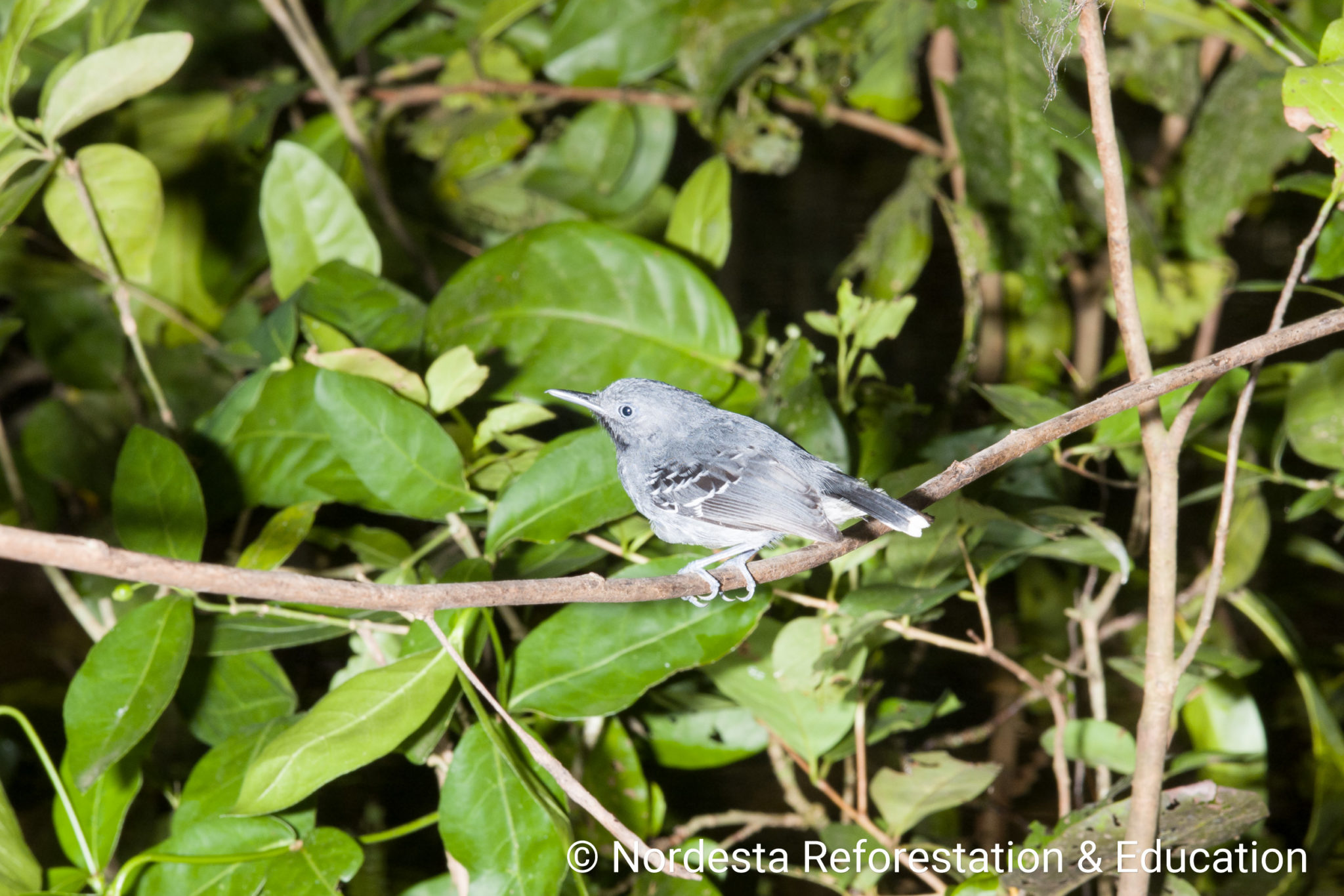
The Band-tailed Antbird, Hypocnemoides maculicauda, is a discreet, insect-eating bird that inhabits the seasonally flooded forests of South America. It is territorial and tends to remain in the same area year-round, rarely venturing into drier environments even during the rainy season.
General behavior
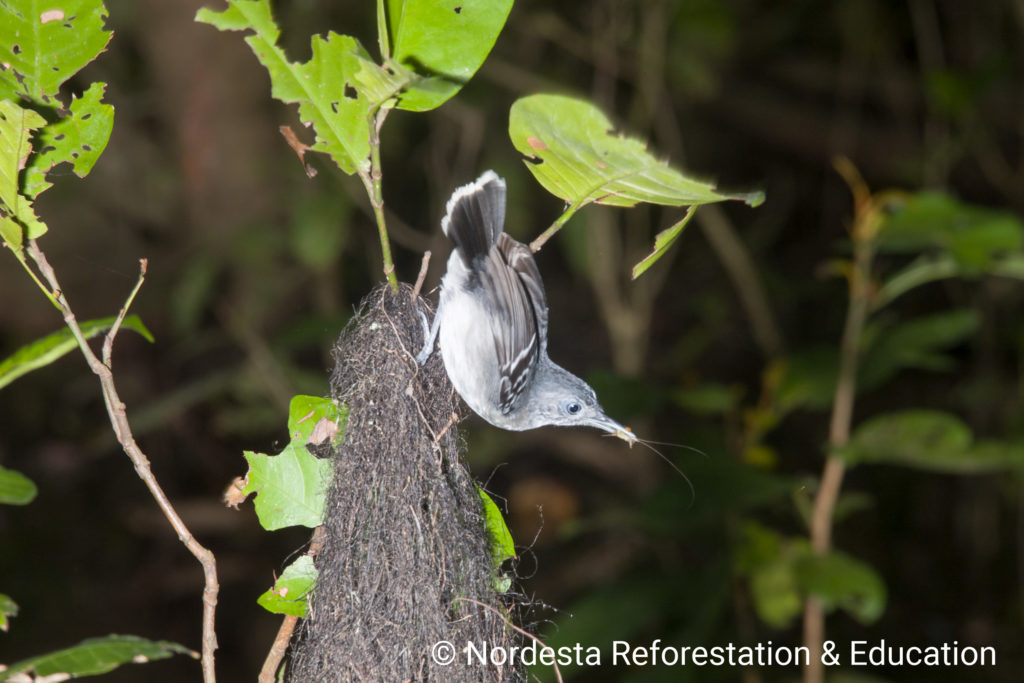
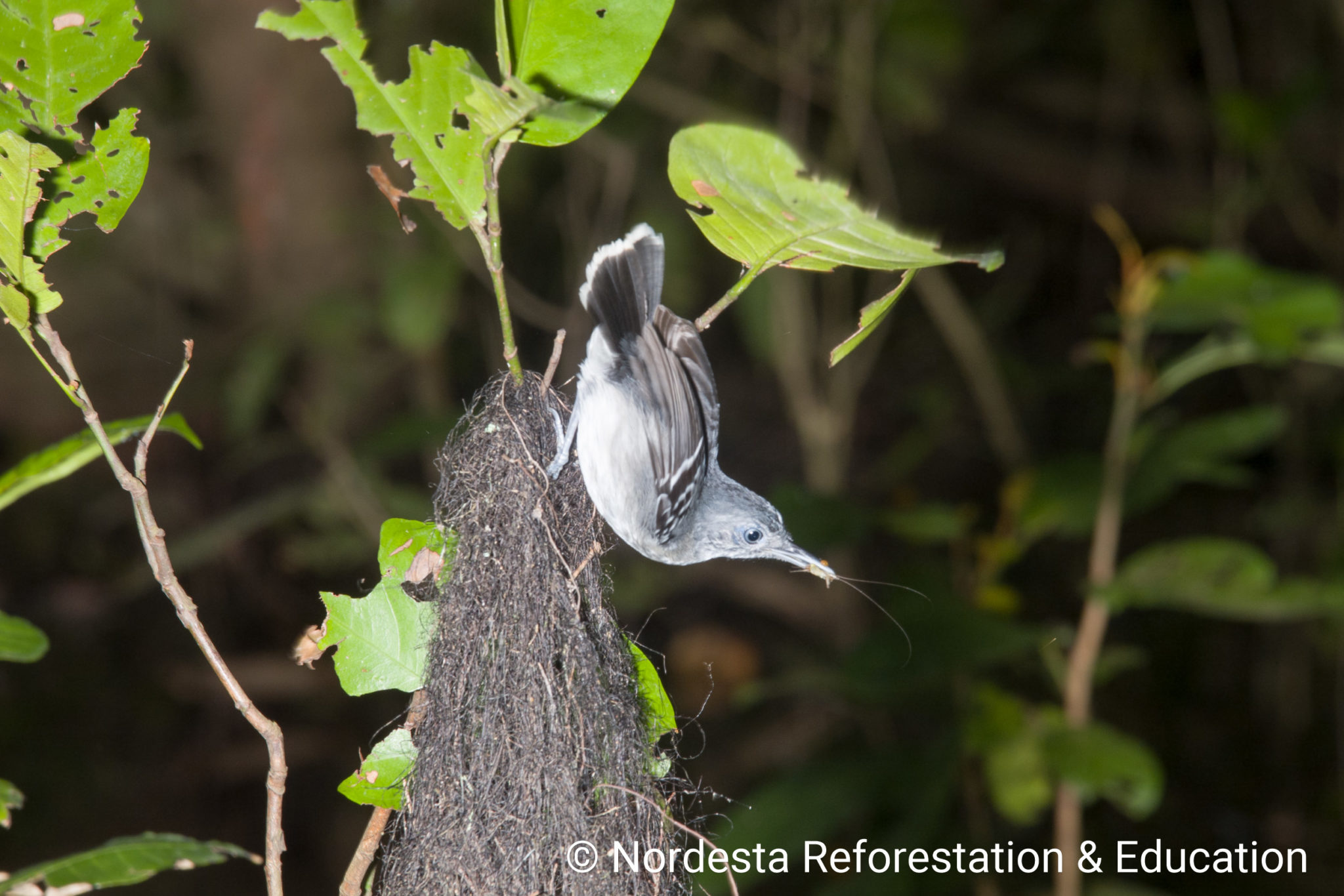
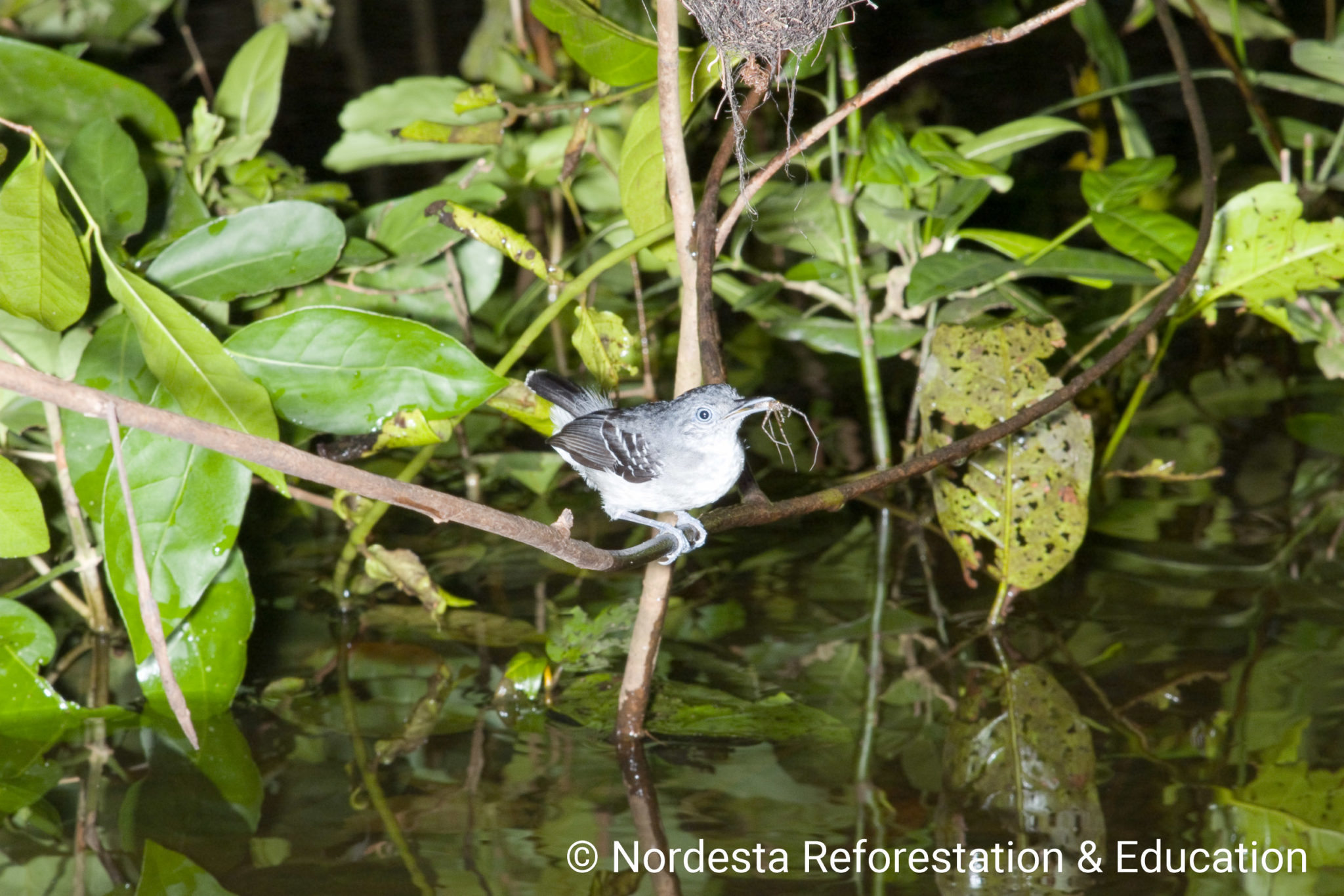
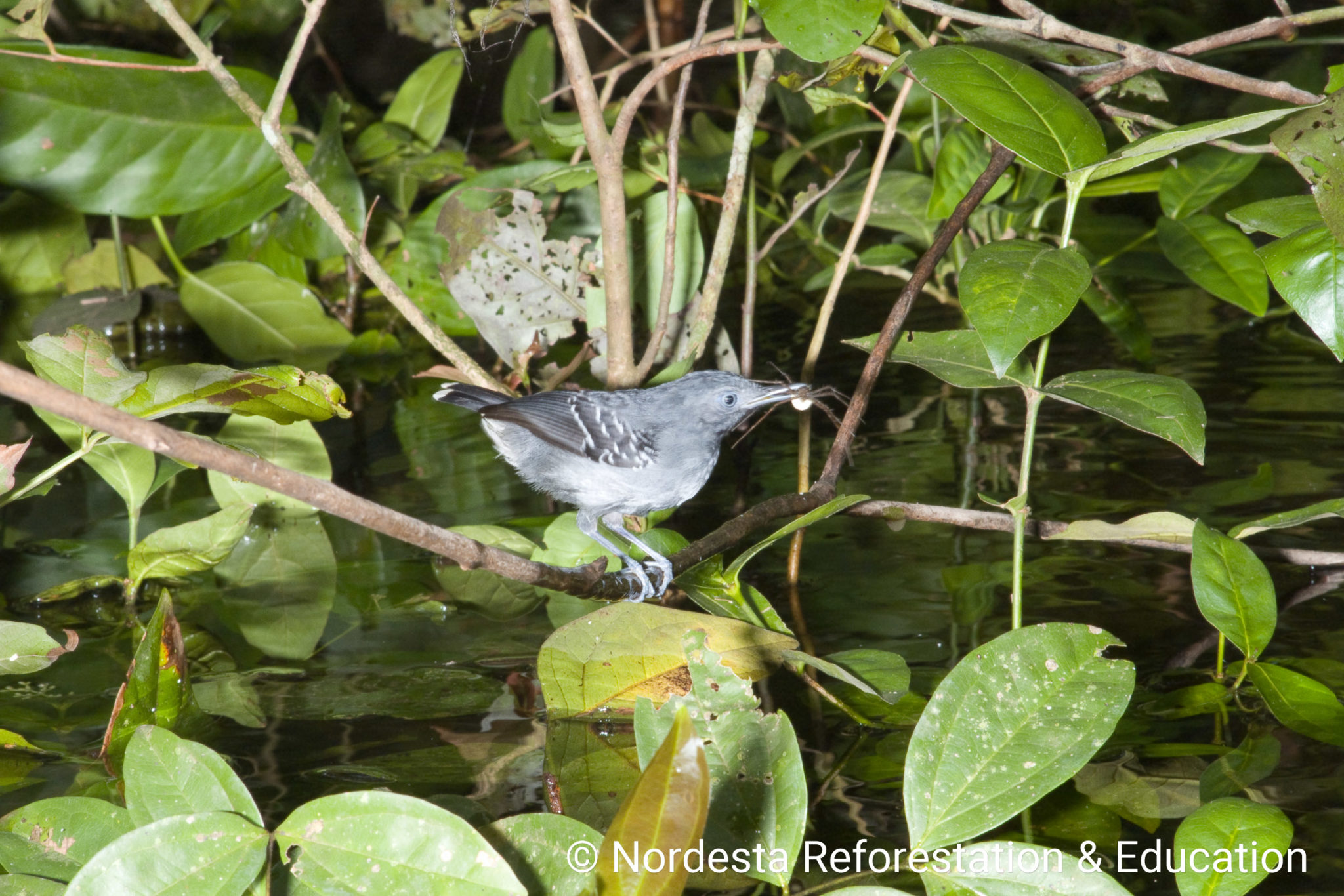
This species is generally quiet and not very vocal. It forages for food among vines, shrubs, and sometimes on the ground or near water surfaces. Its diet includes insects, spiders, butterflies, and occasionally small amphibians or fruits. Both males and females participate in feeding and caring for the young, though females tend to bring food more frequently. Adults carefully monitor the area around the nest and remove waste to maintain cleanliness.
Habitat
Hypocnemoides maculicauda is found along the edges of flooded forests and riverbanks, favouring areas with shrubs and seasonally inundated vegetation. It avoids dense vegetation and drier habitats, strongly favouring open, flooded environments.
Nest observation sites
We studied nests in Caseara, Tocantins (3 nests), and Poconé, Mato Grosso (2 nests).
Breeding season
In Caseara, breeding occurs from January to February (peak rainy season), and in Poconé, in March (end of rainy season).
The nest
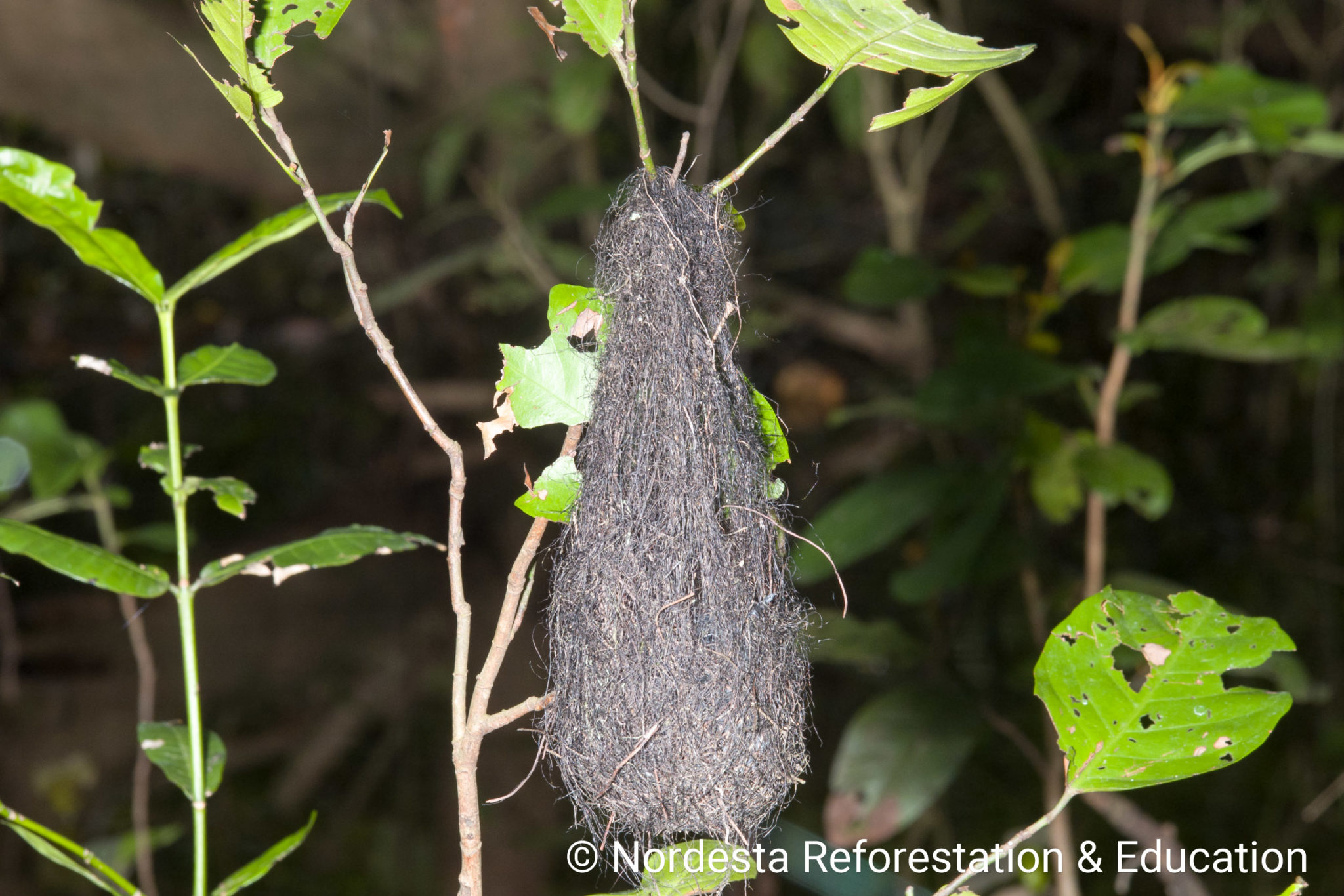
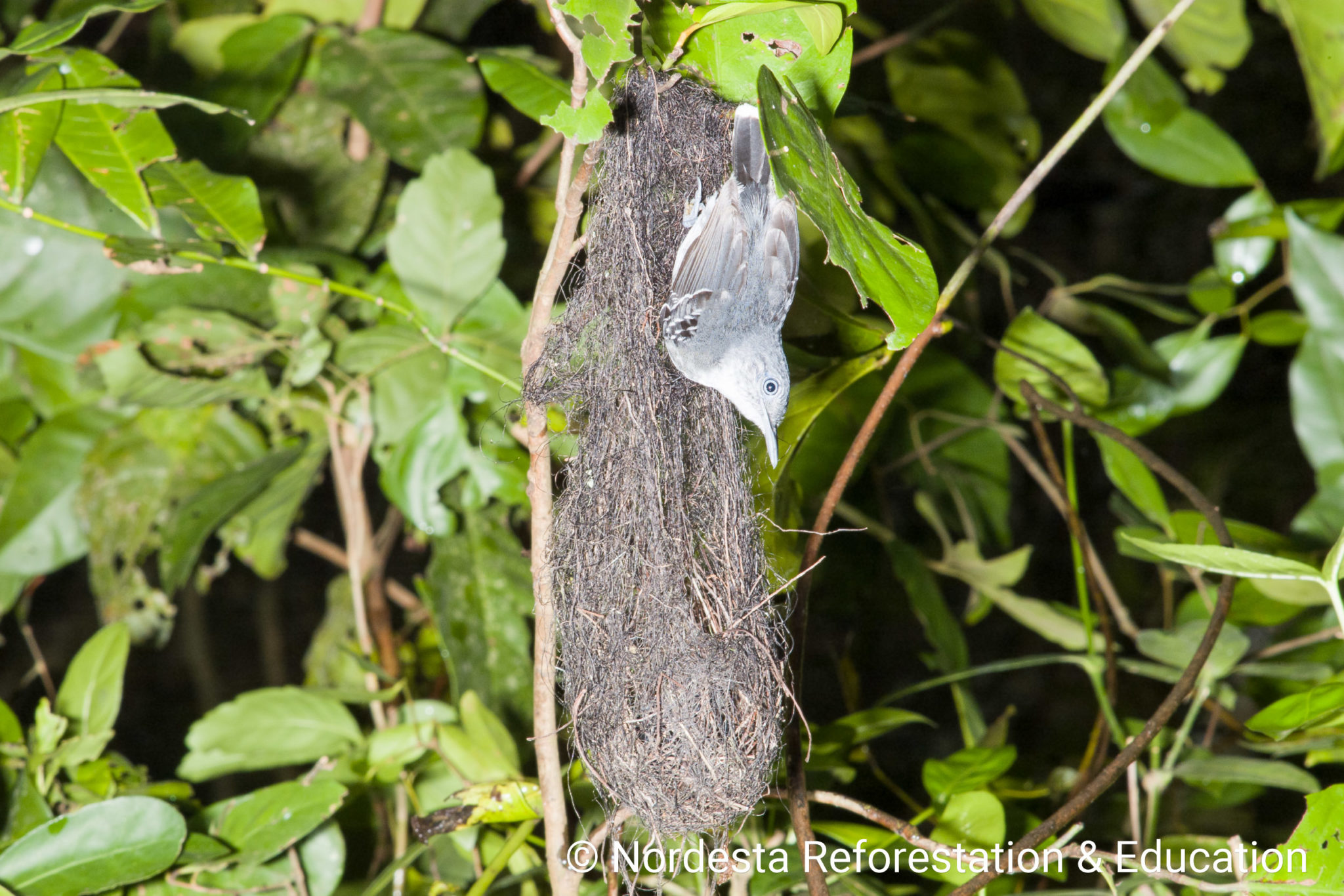
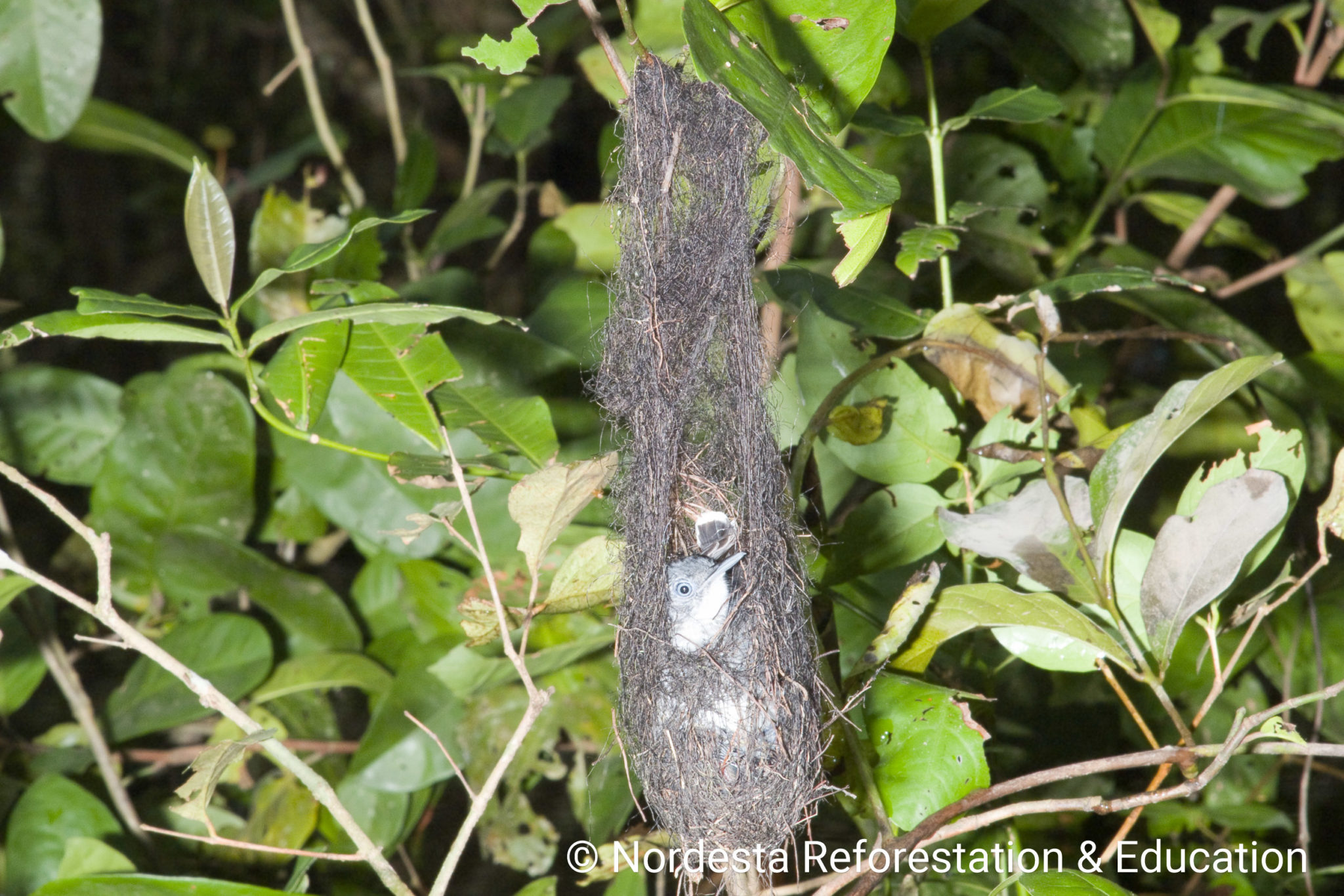
The nest is a hanging pouch, built 80–180 cm above water. It’s woven from plant fibres, especially palm fibres, and animal hairs, possibly horsehair. The inside is lined with dry leaves. The entrance is usually in the middle, but can shift if the structure sags.
Nests are not reused but are rebuilt nearby, often in the same tree. Some are made with fine black fibres and aerial roots from vine species. We found these nests were primarily placed in low shrubs over water, usually around 18 cm above the surface.