Fringilidae
Grassland sparrow
Ammodramus humeralis
The Ammodramus humeralis is widely found across Brazil, primarily in open areas such as dry grasslands, savannas, and wooded fields. It can also be found in regenerated areas, plantations, and even urban settings.
General behavior
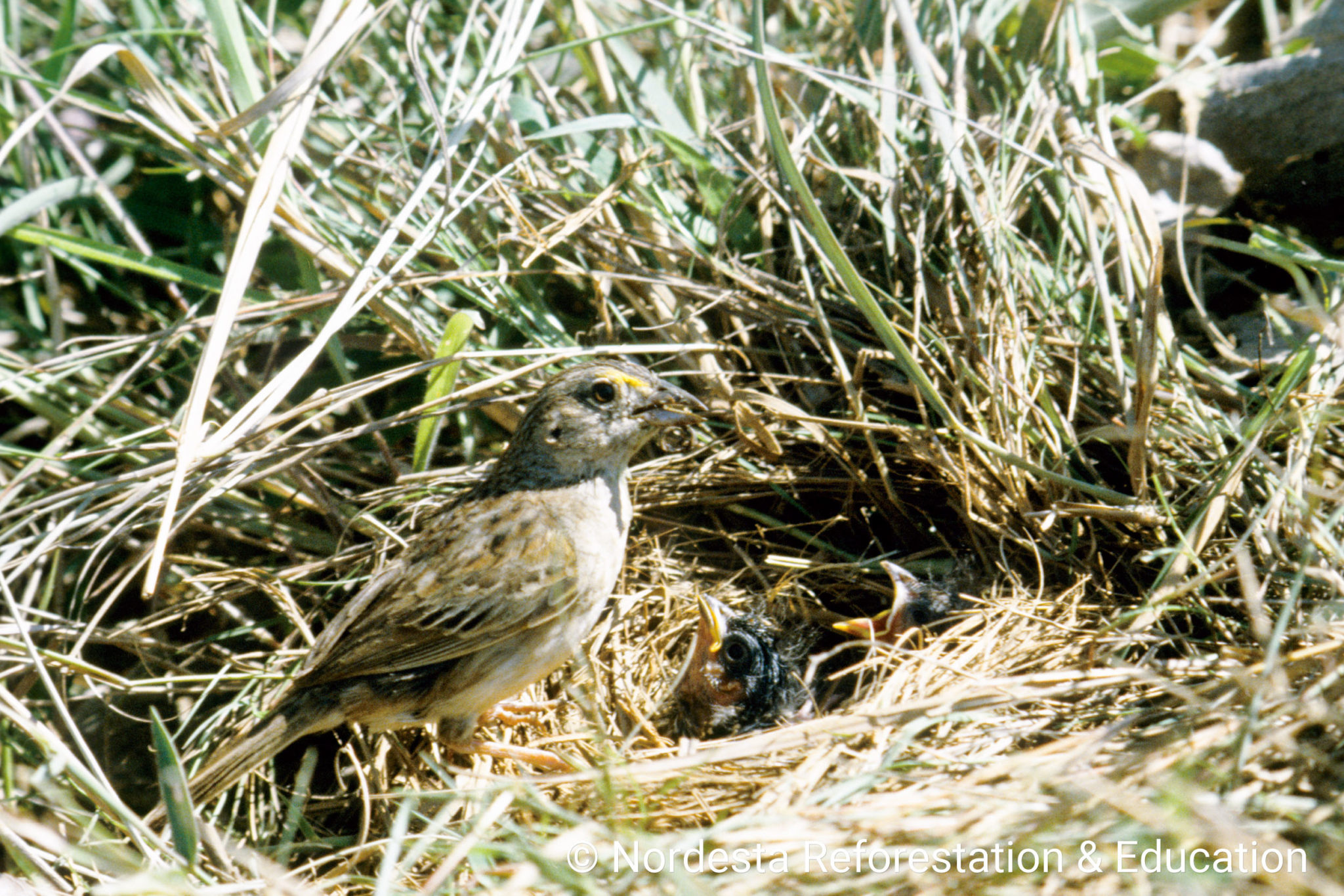
This species is discreet and spends most of its time foraging on the ground. It feeds on seeds and insects, using its feet to knock over grass to access food. Its local name, “corre-corre,” comes from its swift movement through the grasslands. The male has a unique, melancholy song and performs a nuptial flight in which it rises into the air and descends in a wide arc. The species also displays a behaviour where adults feign injury to distract potential predators from their nest.
Habitat
Ammodramus humeralis lives in various habitats, including dry grasslands, cerrado regions, and tall grass areas. It is also found in areas undergoing regeneration, plantations, and urban landscapes.
Nest observation sites
Our nest observation sites include Arcos, Minas Gerais (8 nests), Quebrangulo, Alagoas (4 nests), Jeremoabo, Bahia (1 nest), Poconé, Mato Grosso (1 nest)
Breeding season
The species generally breeds in the beginning of the rainy season. In Quebrangulo, the breeding season runs from March to July, while in others, such as Arcos and Poconé, it occurs from October to December. In Jeremoabo, Bahia, we found a nest in January, although rainfall is unpredictable in the area.
The nest
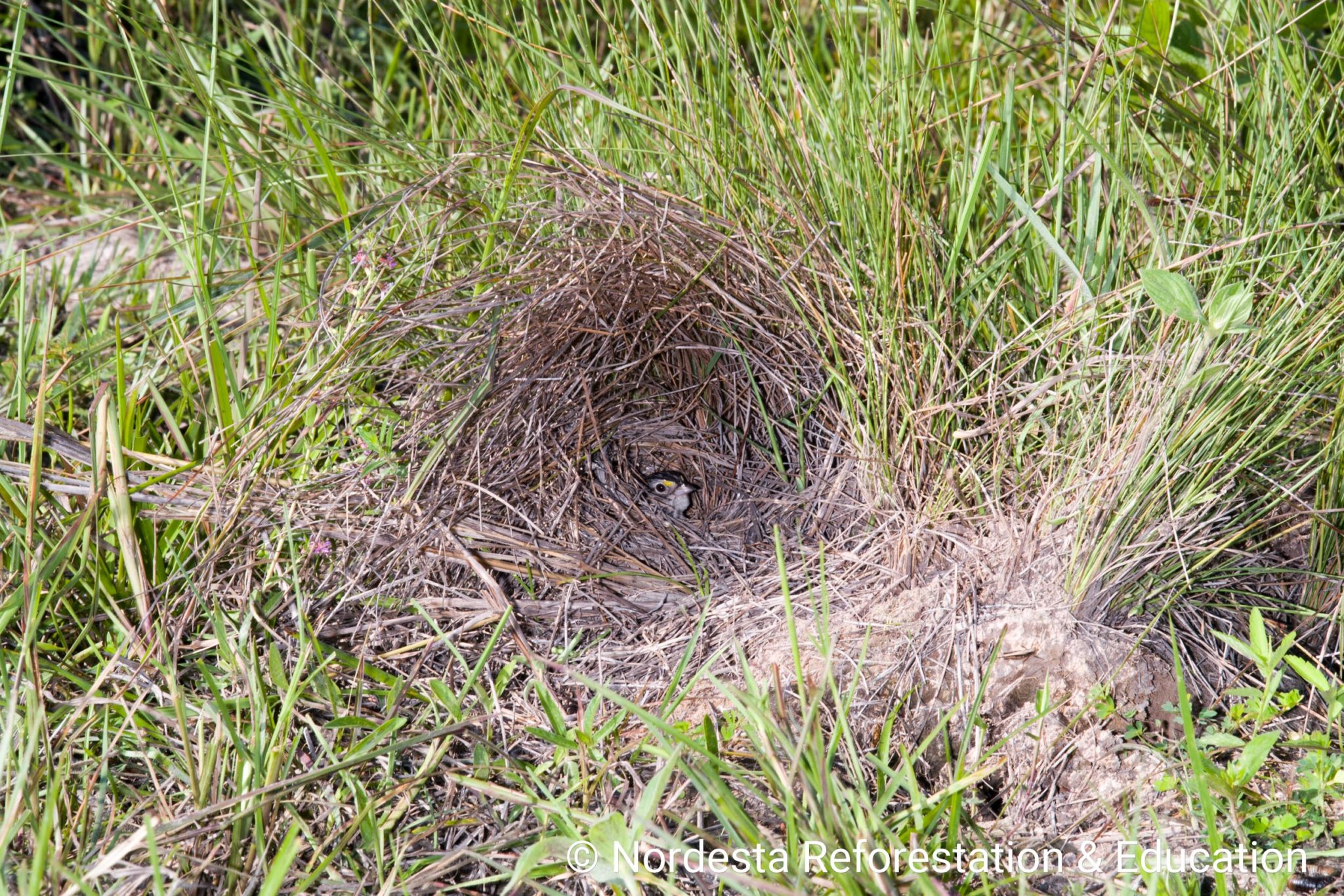
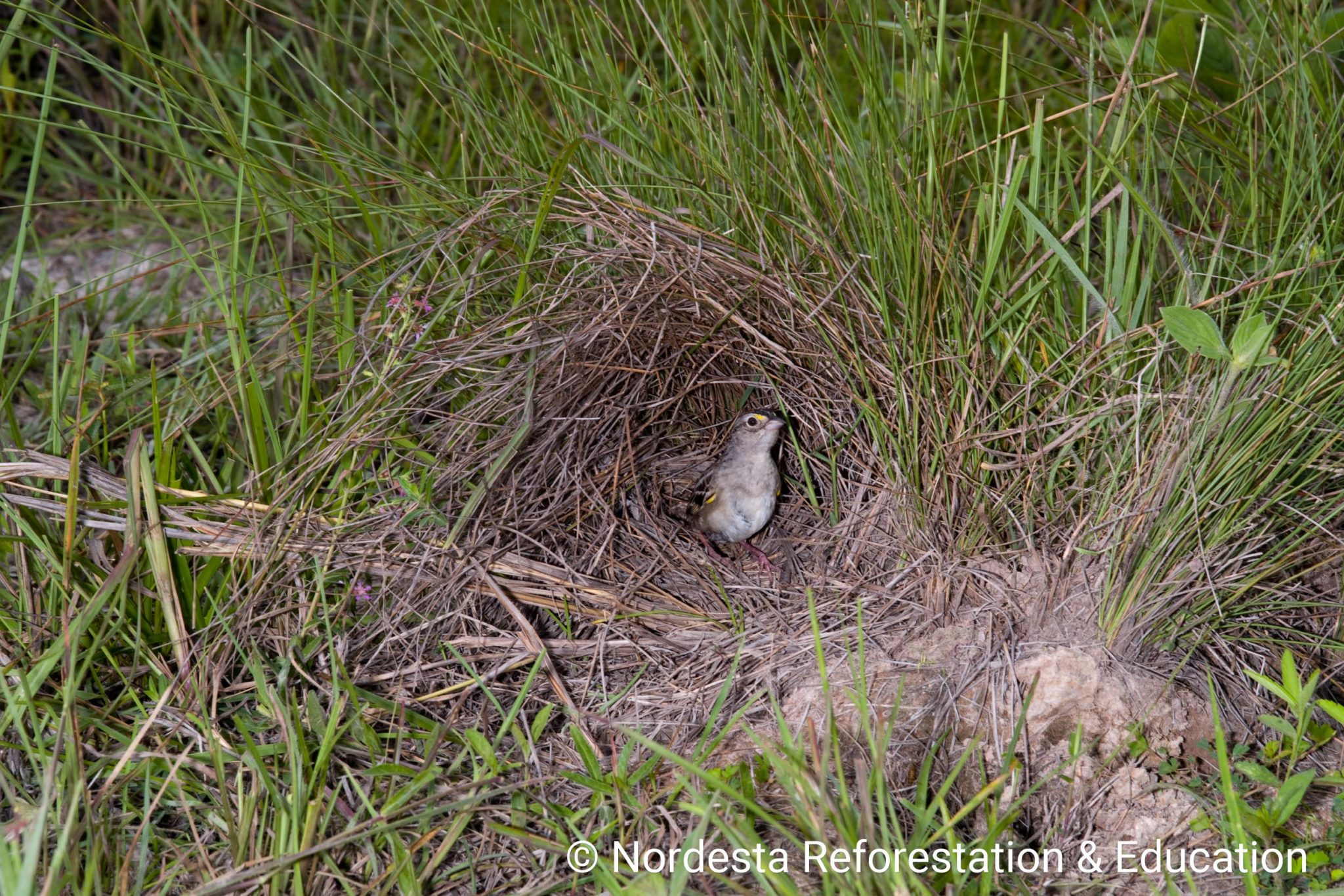
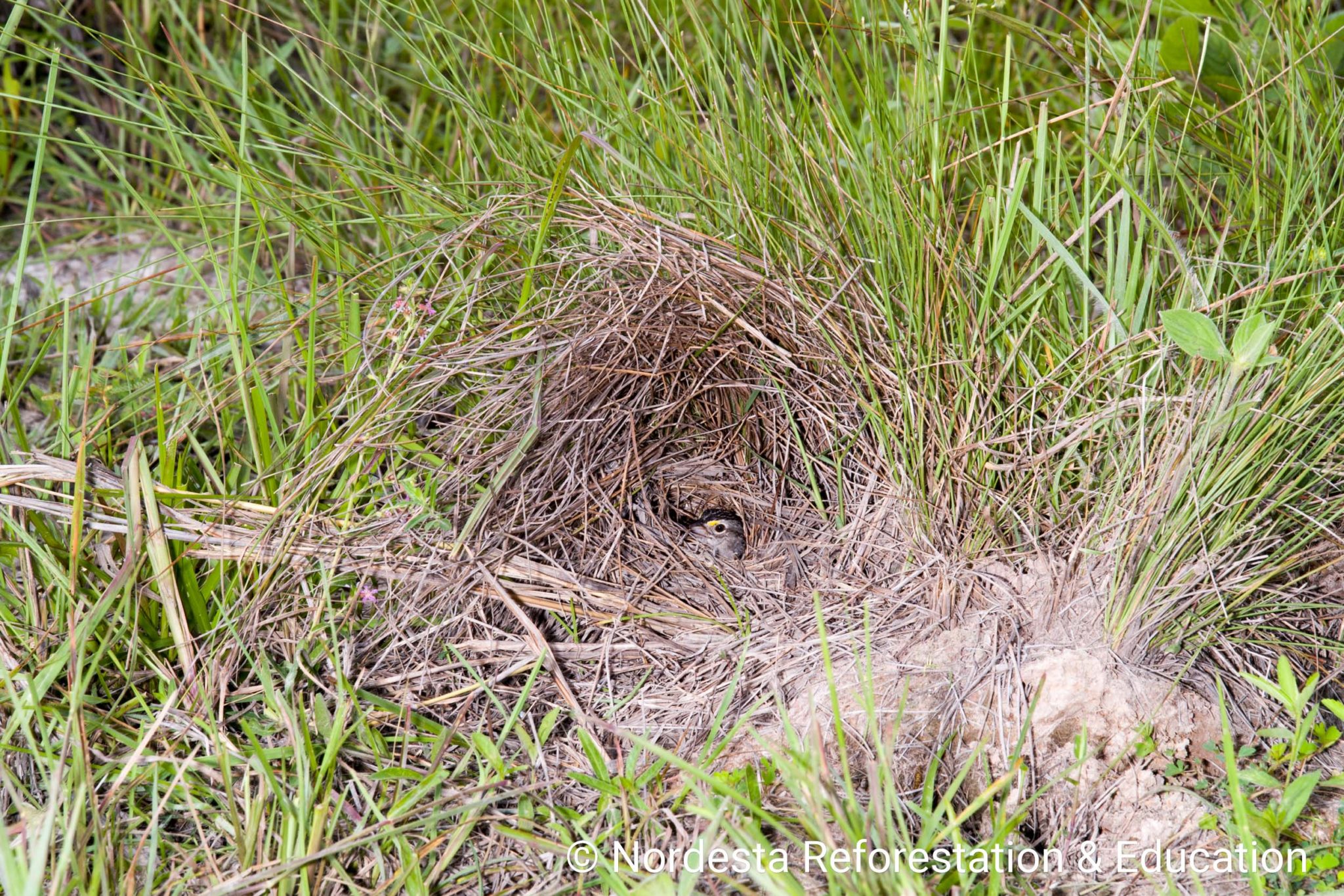
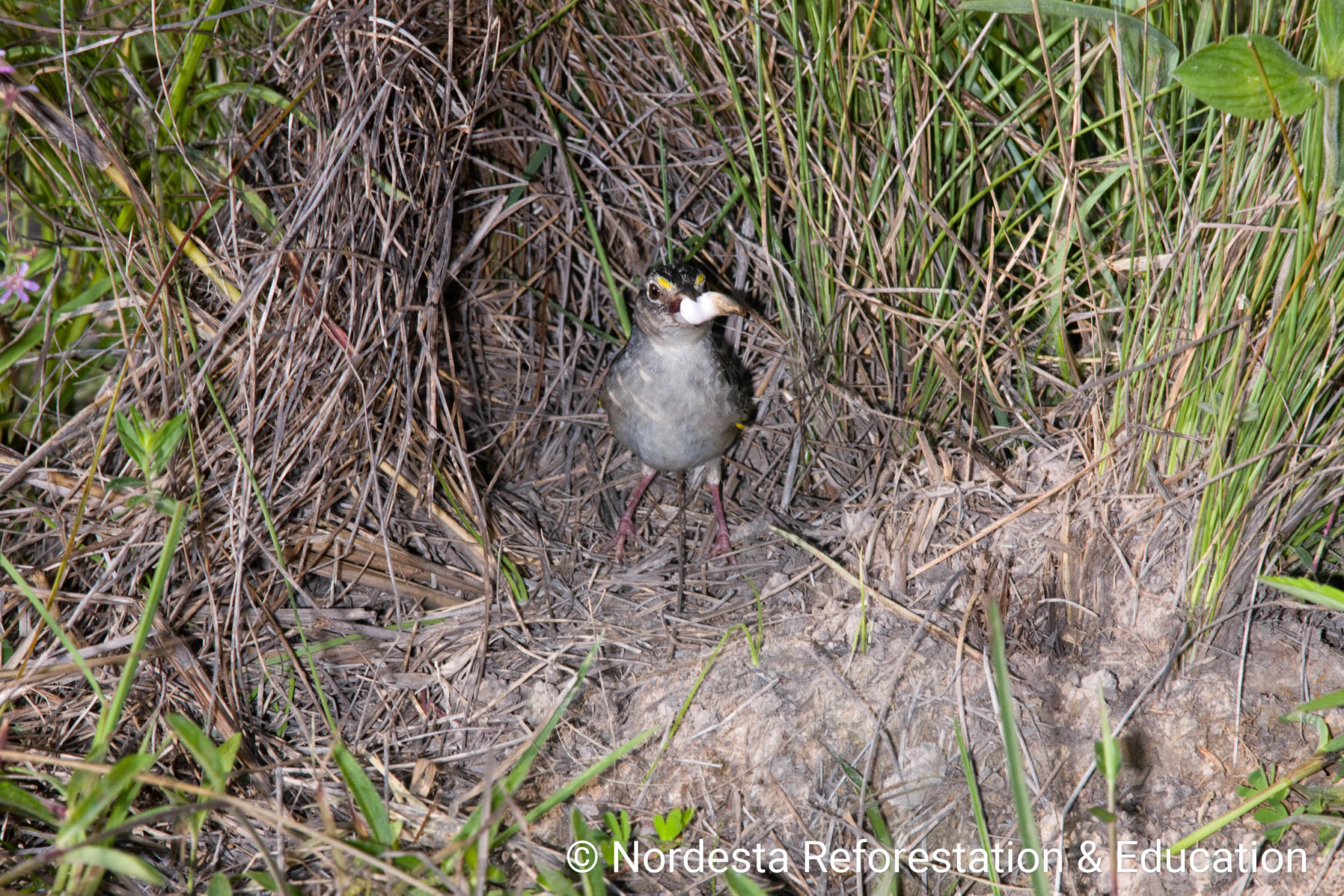
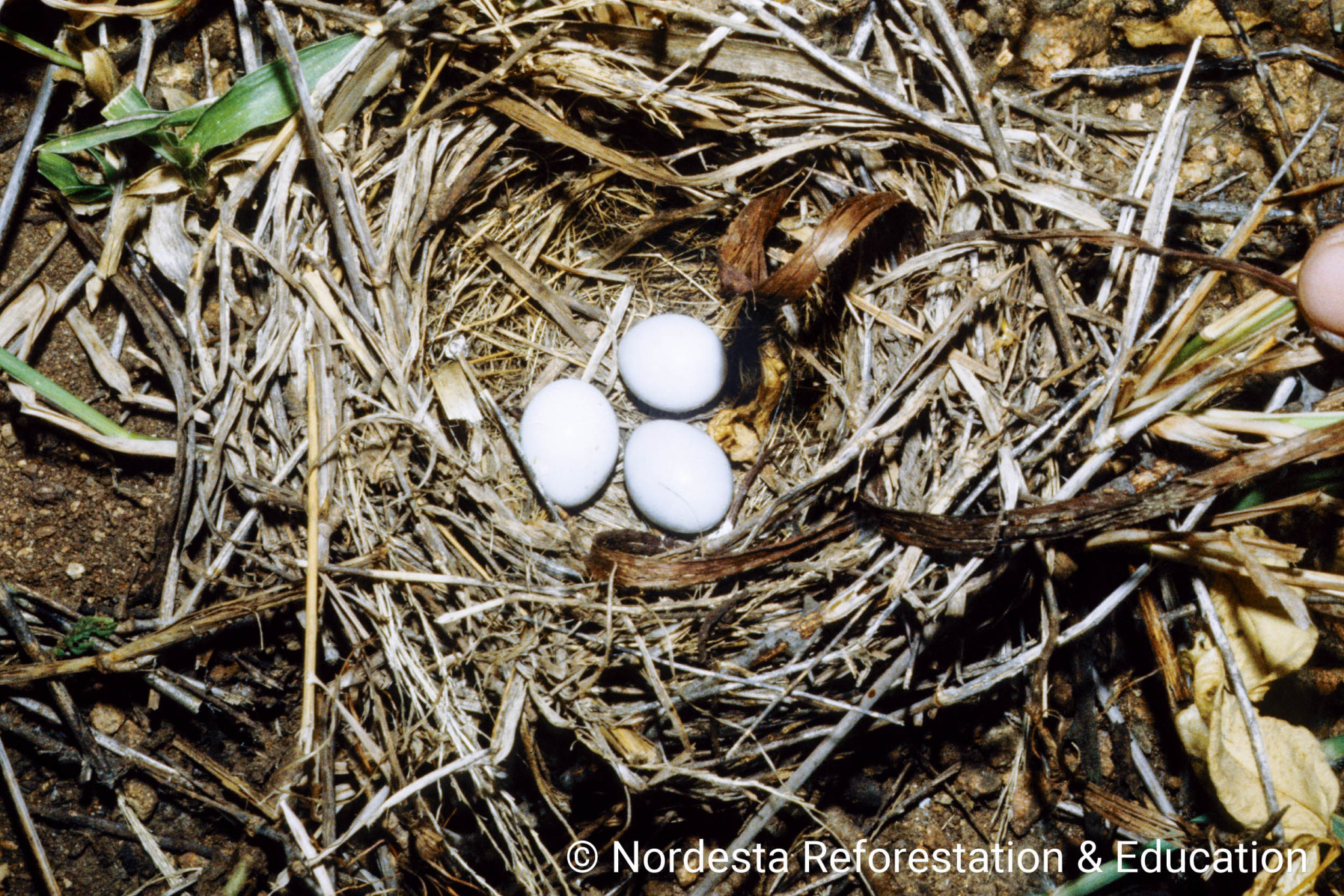
The nest is a shallow cup made from dried grasses and roots, typically found in a depression in the ground. Sometimes, it is built in tall grass, with the grasses folded to form a ball-like shape with a side entrance. The construction primarily includes dry grass leaves and thin grass stalks.