Tyrannidae
Grey-hooded flycatcher
Mionectes rufiventris
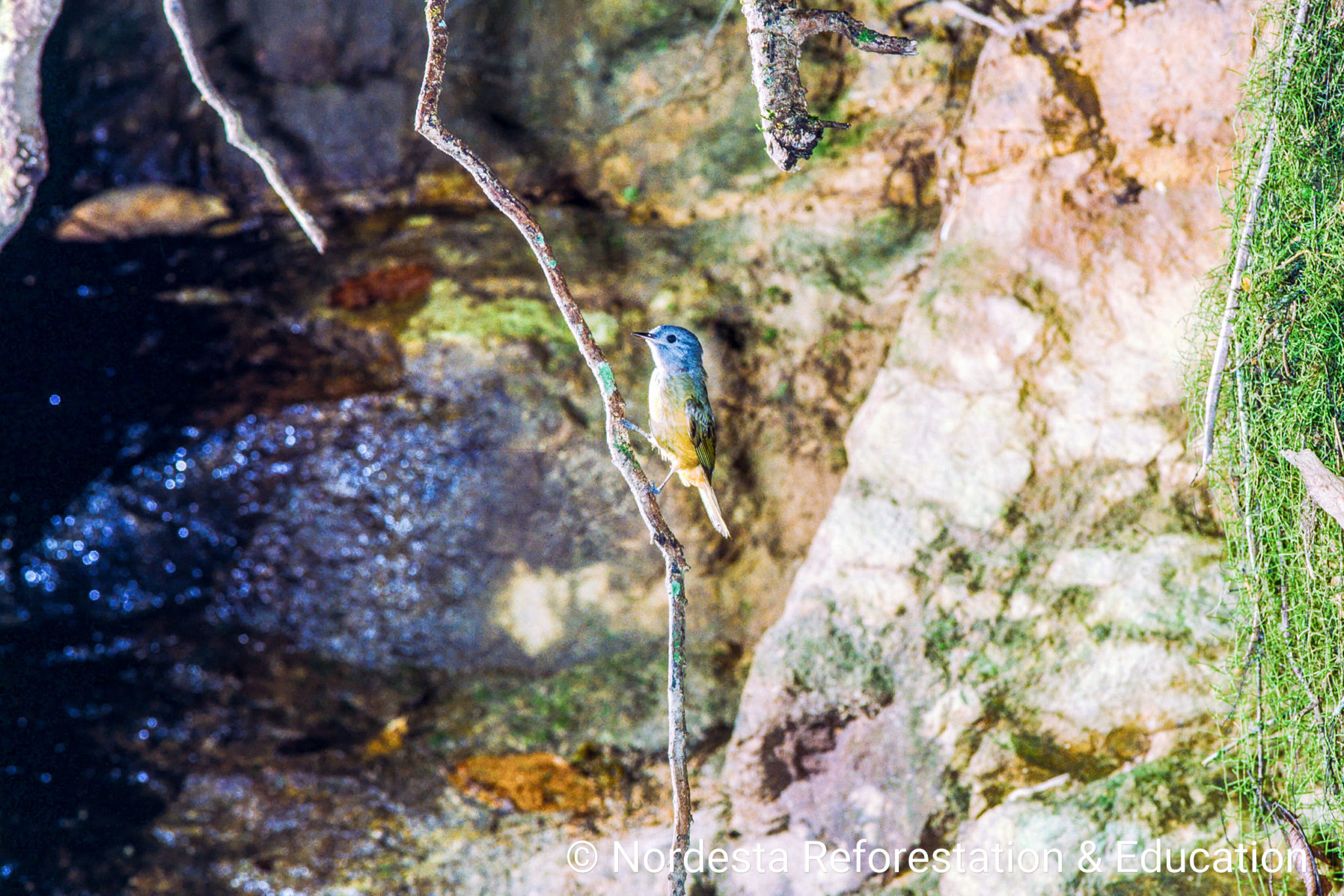
The Grey-hooded Flycatcher, Mionectes rufiventris, is a discreet and elusive bird, most often noticed during its breeding season. Its subtle behaviour and soft vocalizations make it easy to overlook in the dense forest, but during mating periods, it becomes more vocal and active.
General behavior
This species is territorial and engages in a unique mating display known as lekking, where several males sing and display themselves in specific perches to attract females. Vocalizations consist of nasal notes that increase in speed and then stop abruptly. Males may raise their tails, flash the underside feathers, and vibrate their wings as part of this ritual.
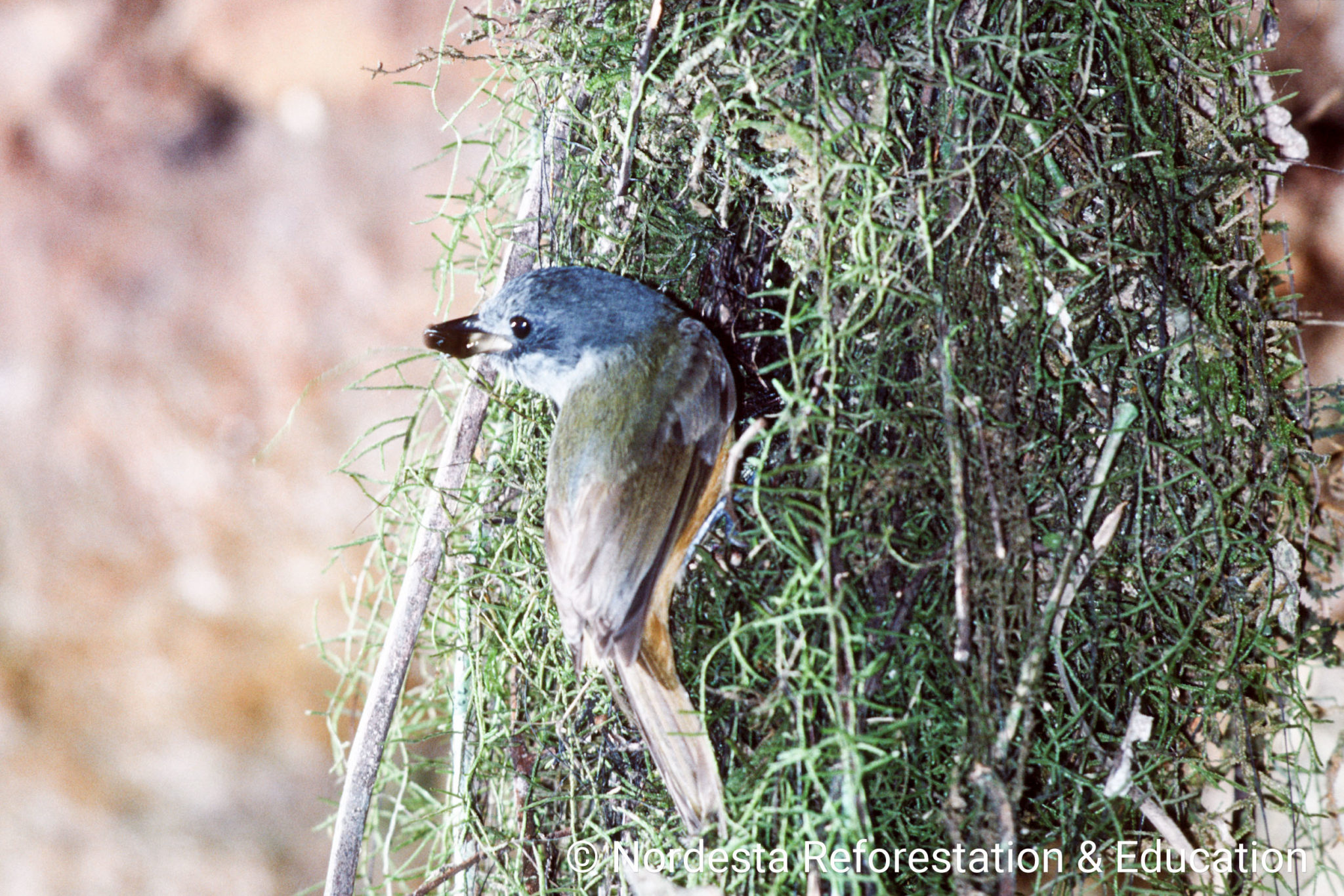
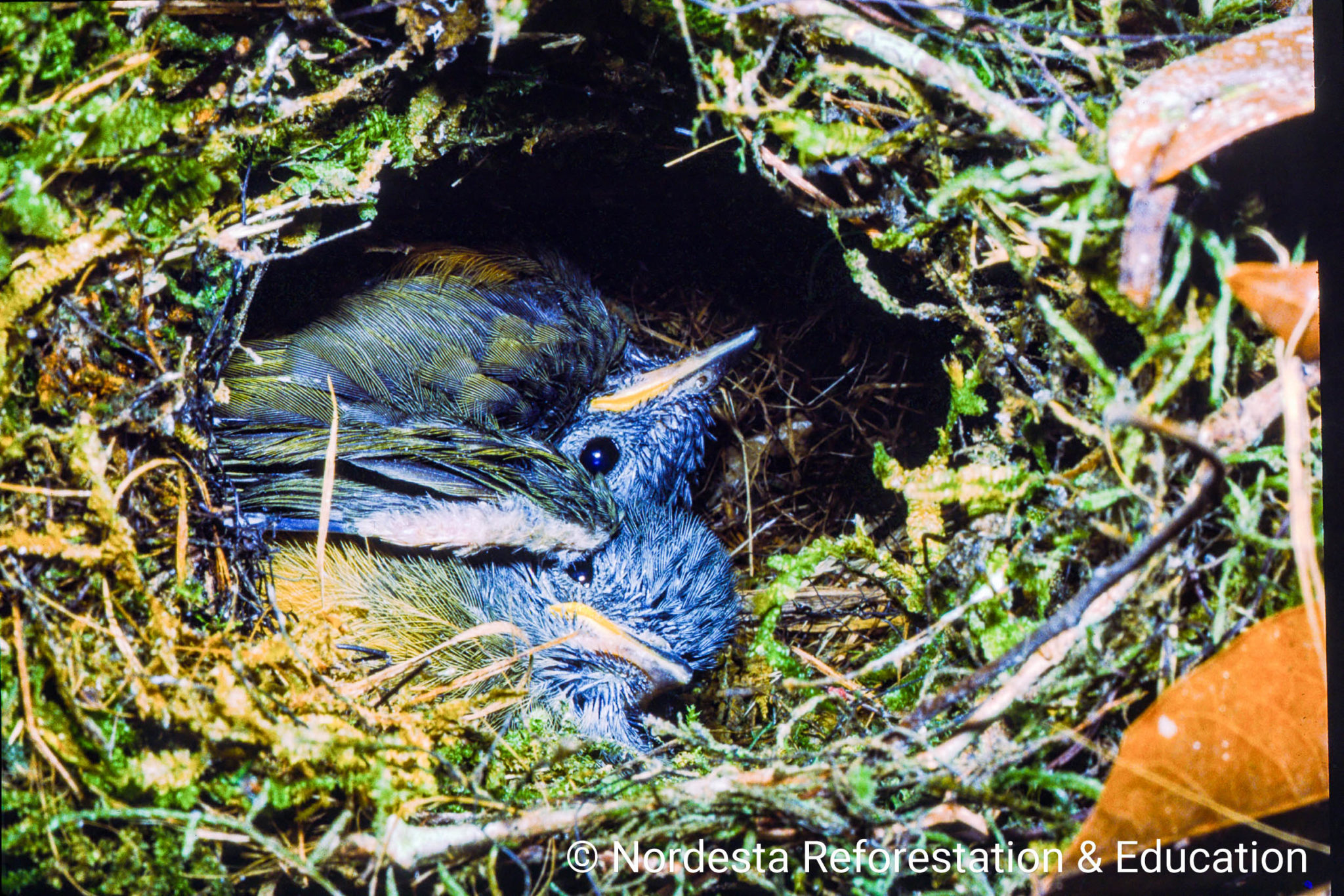
The bird feeds on insects and fruits, including small berries. It has been observed feeding on mistletoe fruits and other soft, fleshy varieties. Adults approach their nests quietly, sometimes staying at the entrance to clean or remove seeds after feeding their chicks.
Habitat
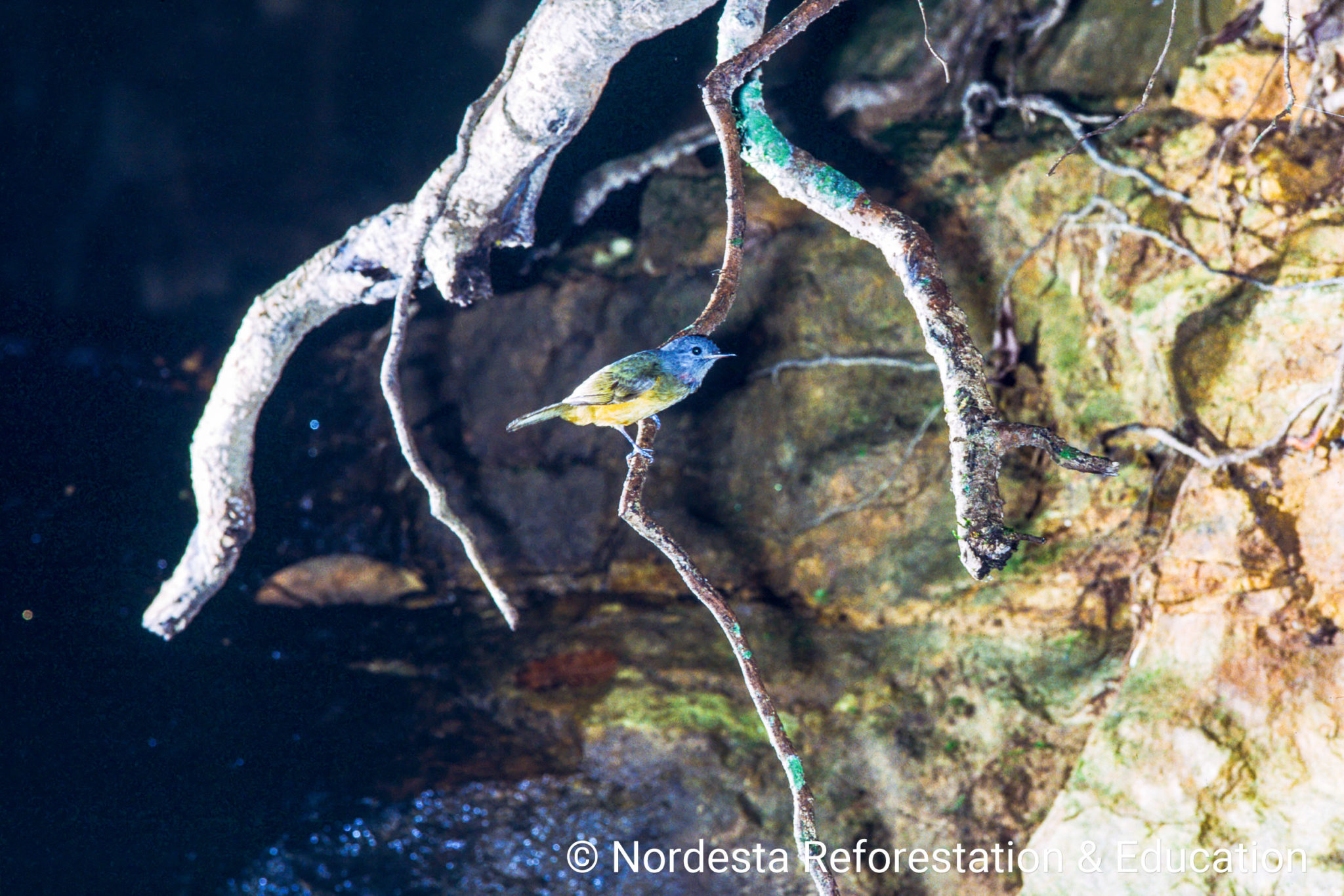
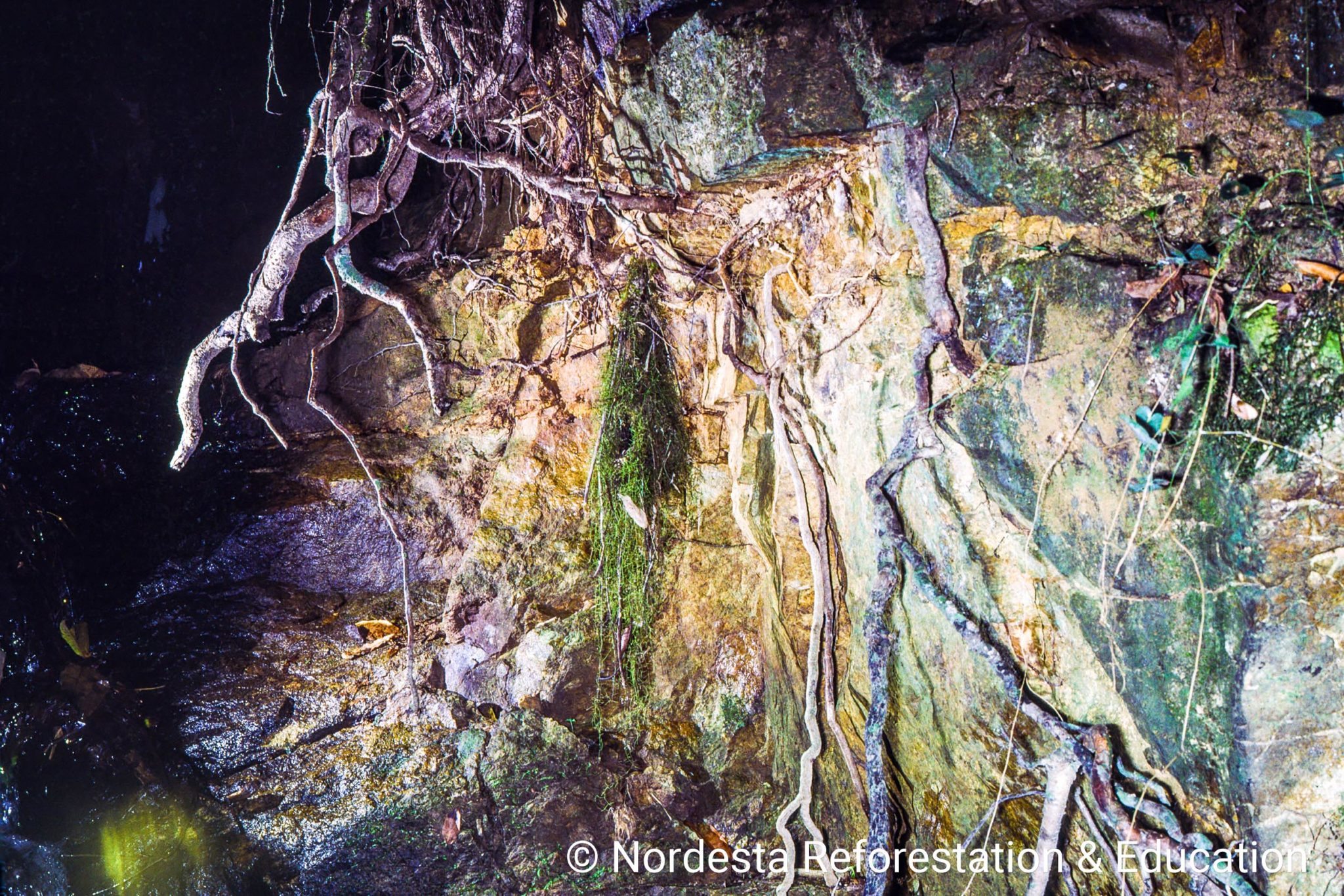
Found primarily in forest areas, especially near streams, this flycatcher prefers to nest in very specific microhabitats, consistently choosing similar streamside locations year after year.
Nest observation sites
We studied nests in Arcos, Minas Gerais (6 nests).
Breeding season
In Arcos, the breeding season spans from October to December.
The nest
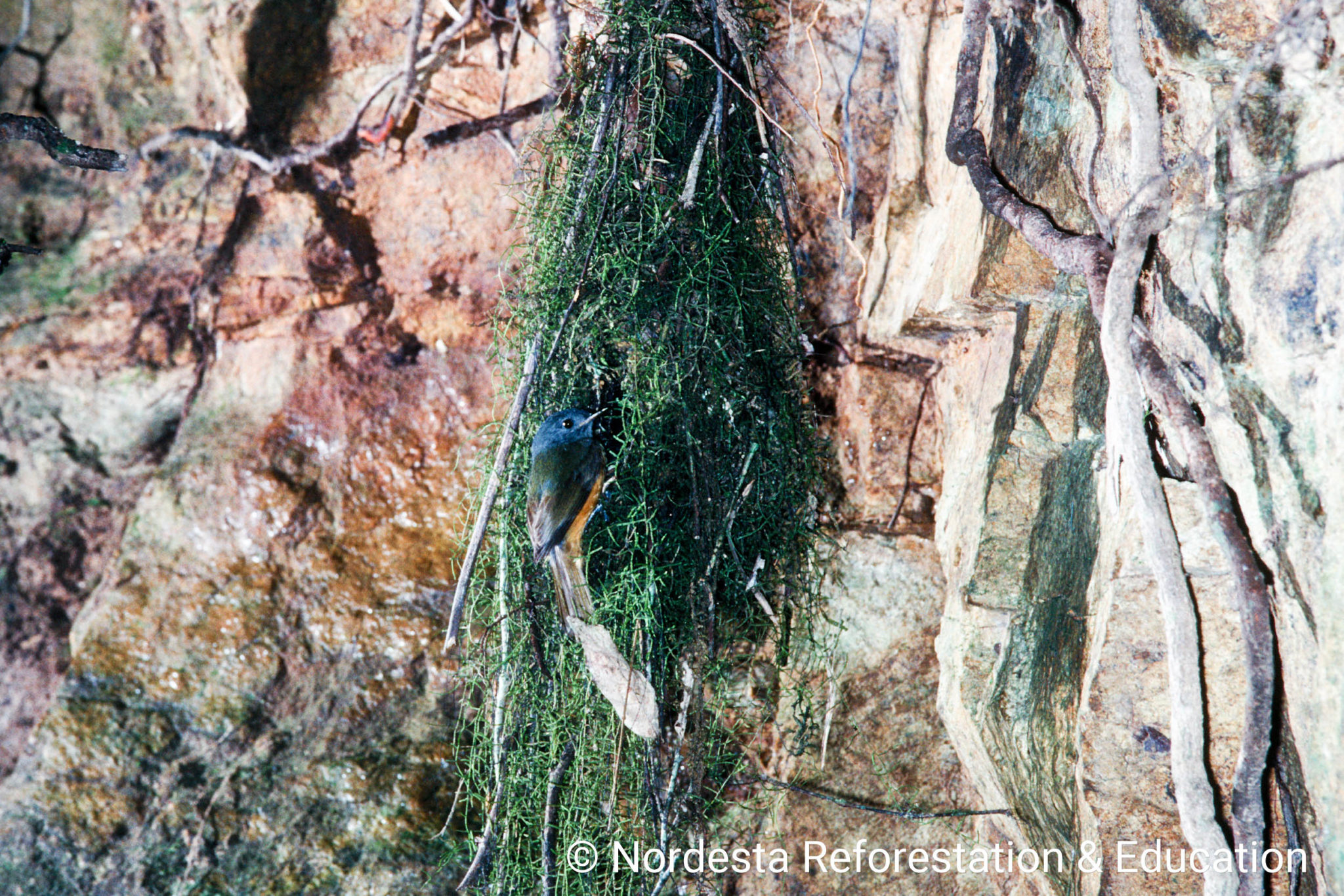
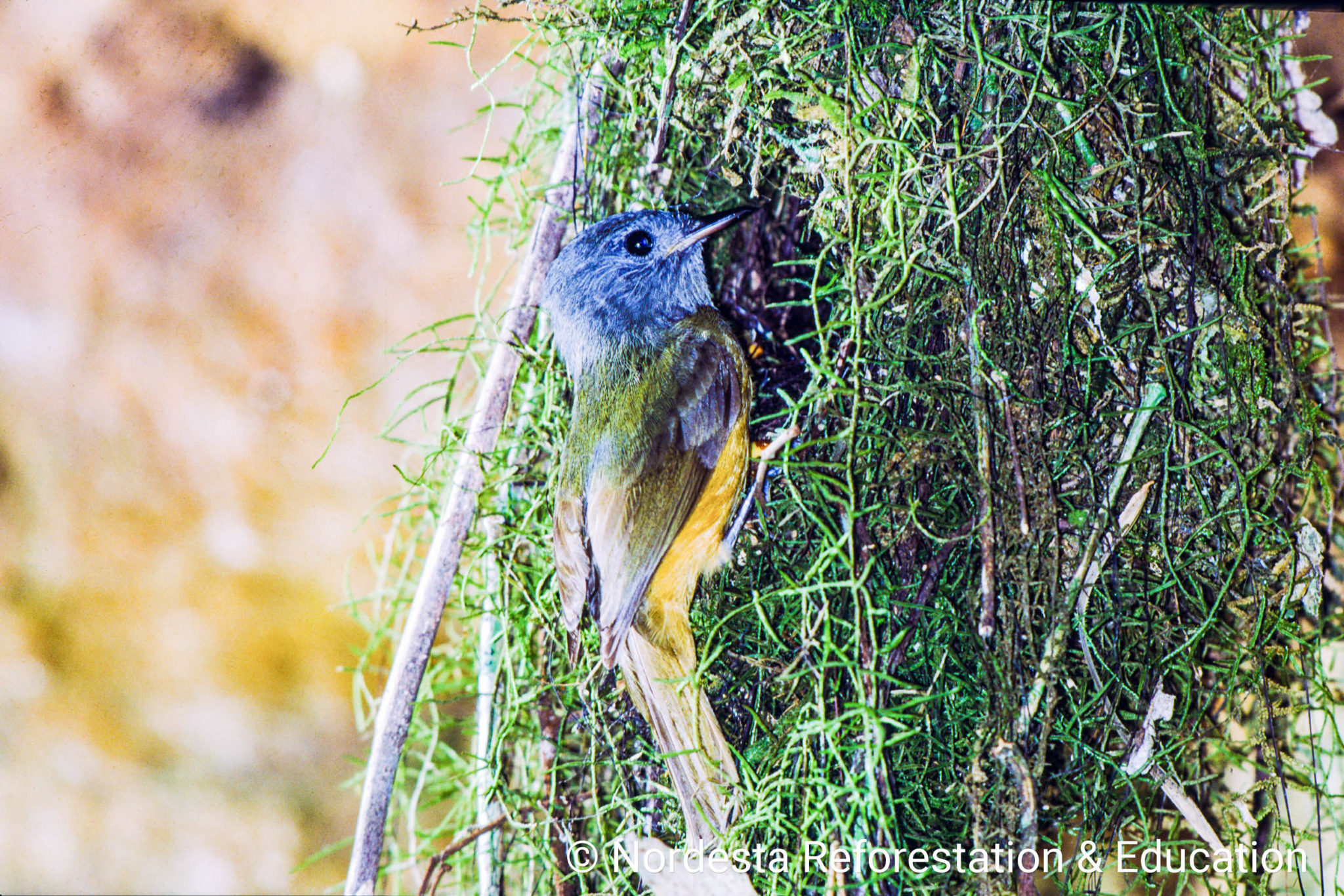
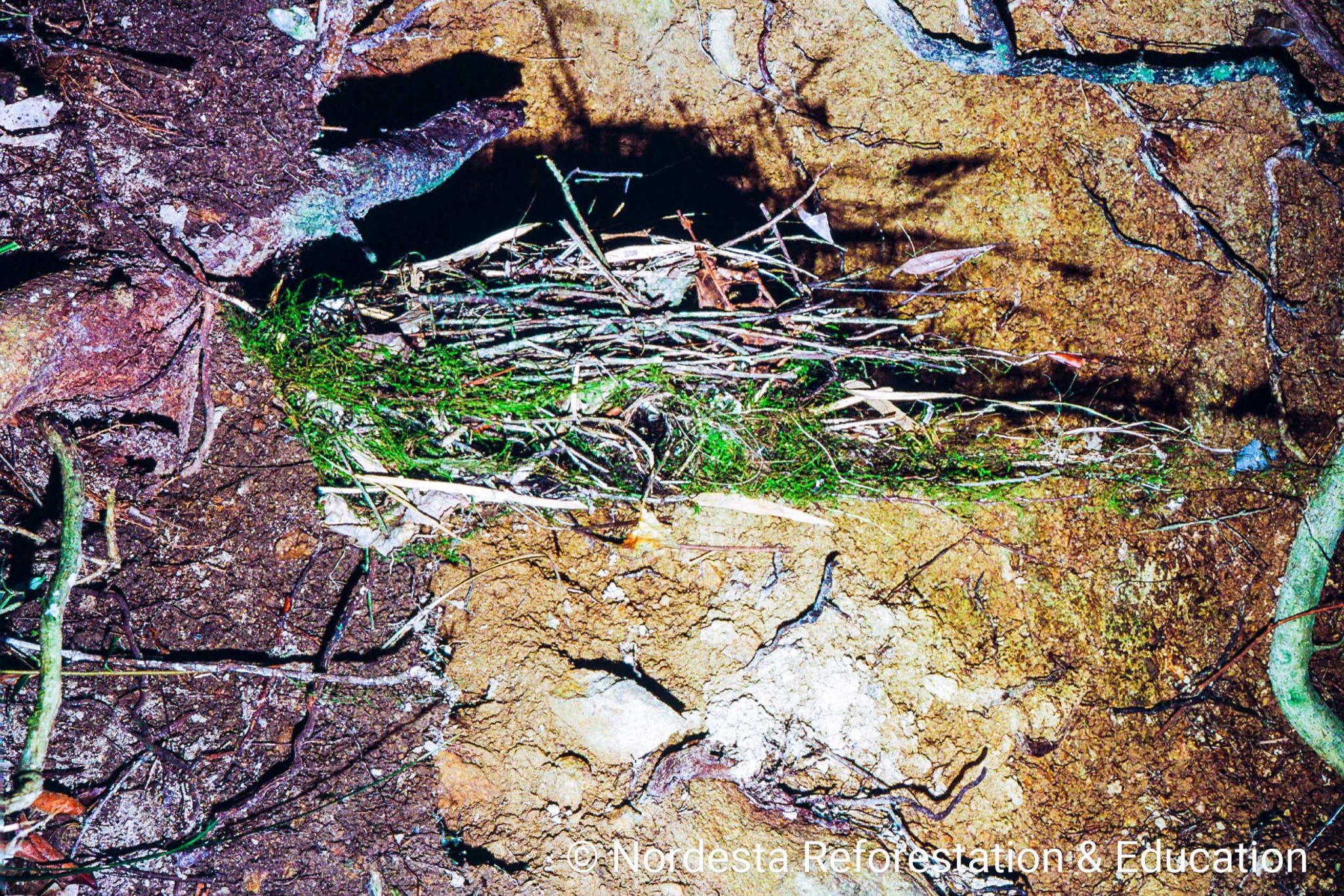
The nest is a hanging, pouch-shaped structure with a side entrance, built from moss, dry leaves, plant fibres, and sometimes fungal materials. It is typically suspended from tree roots or ferns, about 1.5 meters above the ground, directly over small forest streams.
The nest design is consistent across different locations, always positioned over water and well-concealed in forest vegetation.