Ciconiidae
Jabiru
Jabiru mycteria
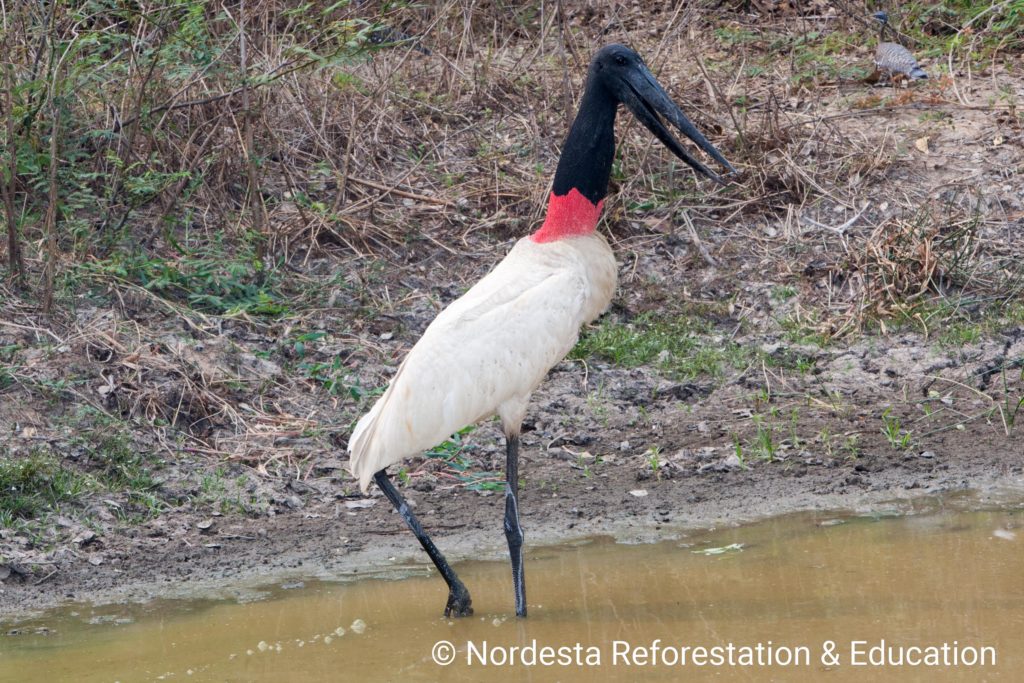
The Jabiru, Jabiru mycteria, is one of the largest stork species in the Americas. It is a striking bird, easily recognized by its entirely white body and black, featherless head and neck. It is found from the southern United States to Argentina, and is widespread in Brazil, although it is rare in the Northeast.
General behavior
Jabirus are known for their calm yet imposing presence. They are social during breeding and can be seen working in pairs to build or maintain nests. Both parents participate in feeding and protecting their young. Their vocalisations are low and guttural, and they often communicate by clapping their beaks. These birds are also known for their patience and care when raising chicks.
Habitat
Jabiru mycteria is usually found in wetlands, open fields, and savannahs, especially in areas like the Pantanal. Nests are often located in tall trees, sometimes even in dry pastures or near human settlements.
Nest observation sites
We monitored nests in Poconé, Mato Grosso (13 nests). The nests were typically placed in isolated trees, including Tabebuia heptaphylla and Sterculia apetala.
Breeding season
In the Pantanal, breeding occurs between April and July, coinciding with the dry season. The timing may vary across regions depending on rainfall.
The nest
Jabiru nests are large platforms built high in trees, often reused and reinforced year after year. Both partners build the nest using thick sticks and line it with softer materials like grass, leaves, and clay. One nest even contained aquatic plants and weighed around 70 kg.
The average nest measured about 2 meters in diameter and was placed roughly 15 meters above the ground. Nests are sometimes shared with or used by other species like Monk Parakeets (Myiopsitta monachus), Plumbeous Ibises (Theristicus caerulescens), and some parrots. In rare cases, Jabirus attempted to nest in structures originally built by other large birds like Harpy Eagles, although unsuccessfully.
The chicks’ diet includes fish, reptiles, and even swamp eels, often delivered directly into the nest through regurgitation. Adults also shade the young during hot days and occasionally bring them water.
For more information, refer to the publication: Studer, A., & Crozariol, M. A. 202_, pages ________, or contact the author at anita.birdaves@gmail.com
Reference:
Studer, A., & Crozariol, M. A. (202_). New breeding information on Brazilian birds. 4: