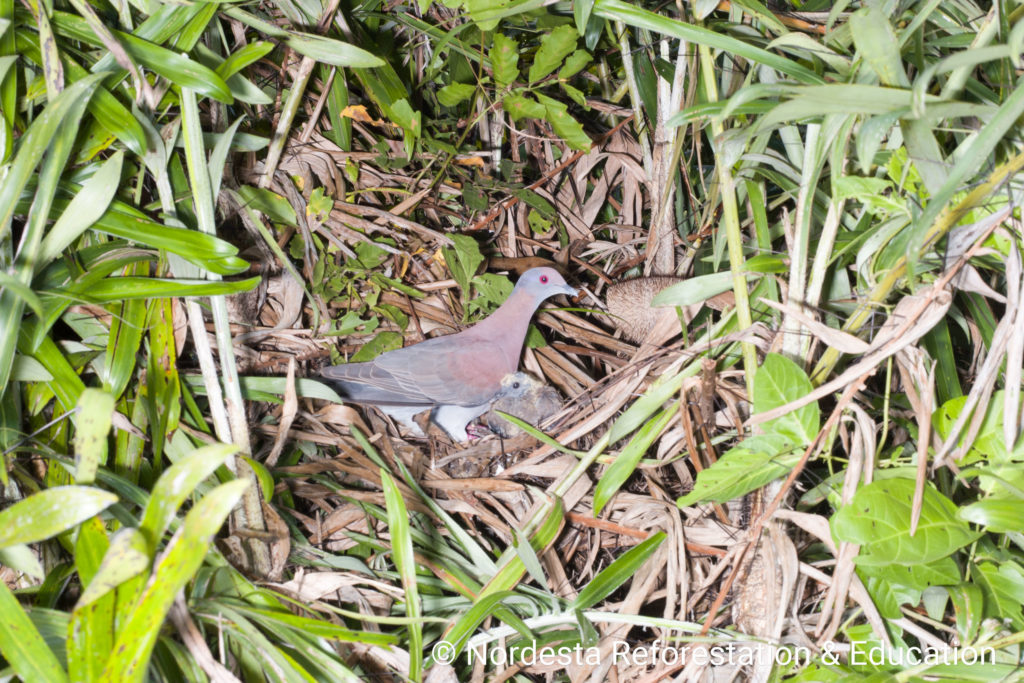
Columbidae
Pale-vented pigeon
Columba cayennensis
The Pale-vented Pigeon, Patagioenas cayennensis, is a widespread species found from Mexico to Argentina. In Brazil, it is common in various habitats, including urban areas, though it’s considered rare in the Caatinga region.
General behavior
Patagioenas cayennensis is generally discreet but often vocalizes in short, hoarse, five-syllable phrases. It is typically seen in pairs or, sometimes, large groups. Its diet includes seeds, grains, and wild fruits. It often forages on the ground and has been observed feeding on fruiting trees such as the “imbira de sapo.”
Habitat
It prefers open areas with scattered trees or bamboo groves but can also be found in pastures, plantations, wetlands, and riverbanks. In these habitats, it often perches on the upper branches of tall trees.
Nest observation sites
We observed and documented nests in Arcos, Minas Gerais (2 nests), and Alto Parnaíba, Maranhão (1 nest).
Breeding season
Breeding has been observed in different months across regions—March, June, September, and October—suggesting the season varies by location. In some areas, nesting may occur year-round, peaking between April and September.
The nest
The nest is a shallow, well-constructed cup made mainly of thin twigs, grasses, and leaves. It is usually built in the forks of trees or vine tangles at heights ranging from 2 to 6 meters above ground. Adults may collect small branches, especially from guava trees, and both partners participate in construction, remaining inside the nest and fluttering their wings during the process. Some nests have been recorded with over 100 twigs.
For more information, refer to the publication: Studer, A., & Crozariol, M. A. 2023, pages 491—493, or contact the author at anita.birdaves@gmail.com
Reference:
Studer, A., & Crozariol, M. A. (2023). New breeding information on Brazilian birds. 2: Columbidae and Cuculidae. Bulletin of the British Ornithologists’ Club, 143(4), 485-553. https://doi.org/10.25226/bboc.v143i4.2023.a6.