Thraupidae
Violaceous euphonia
Euphonia violacea
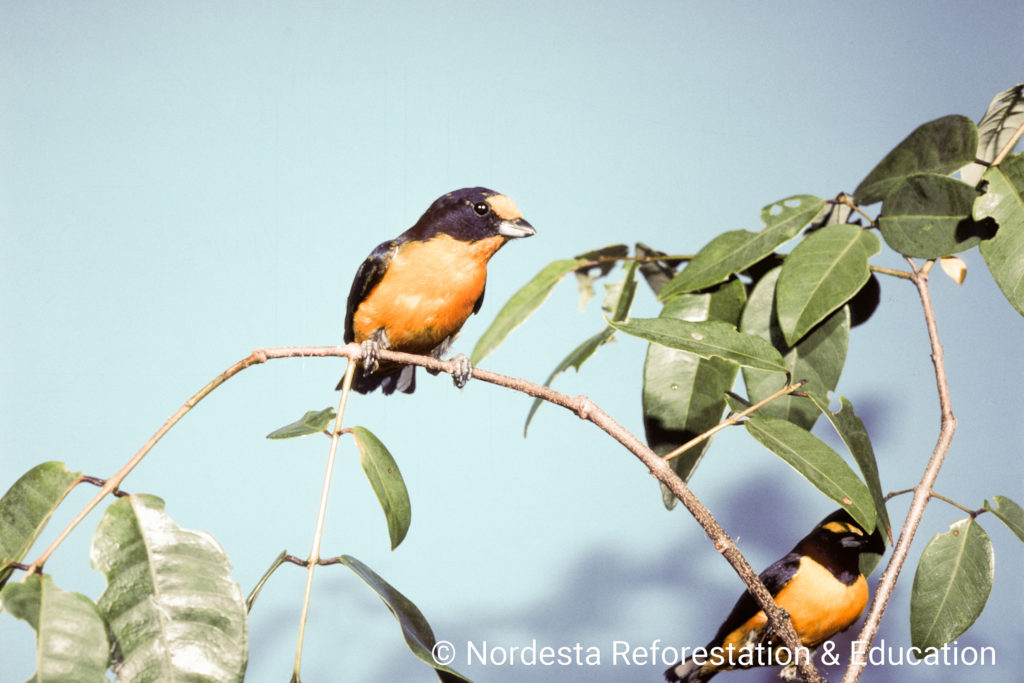
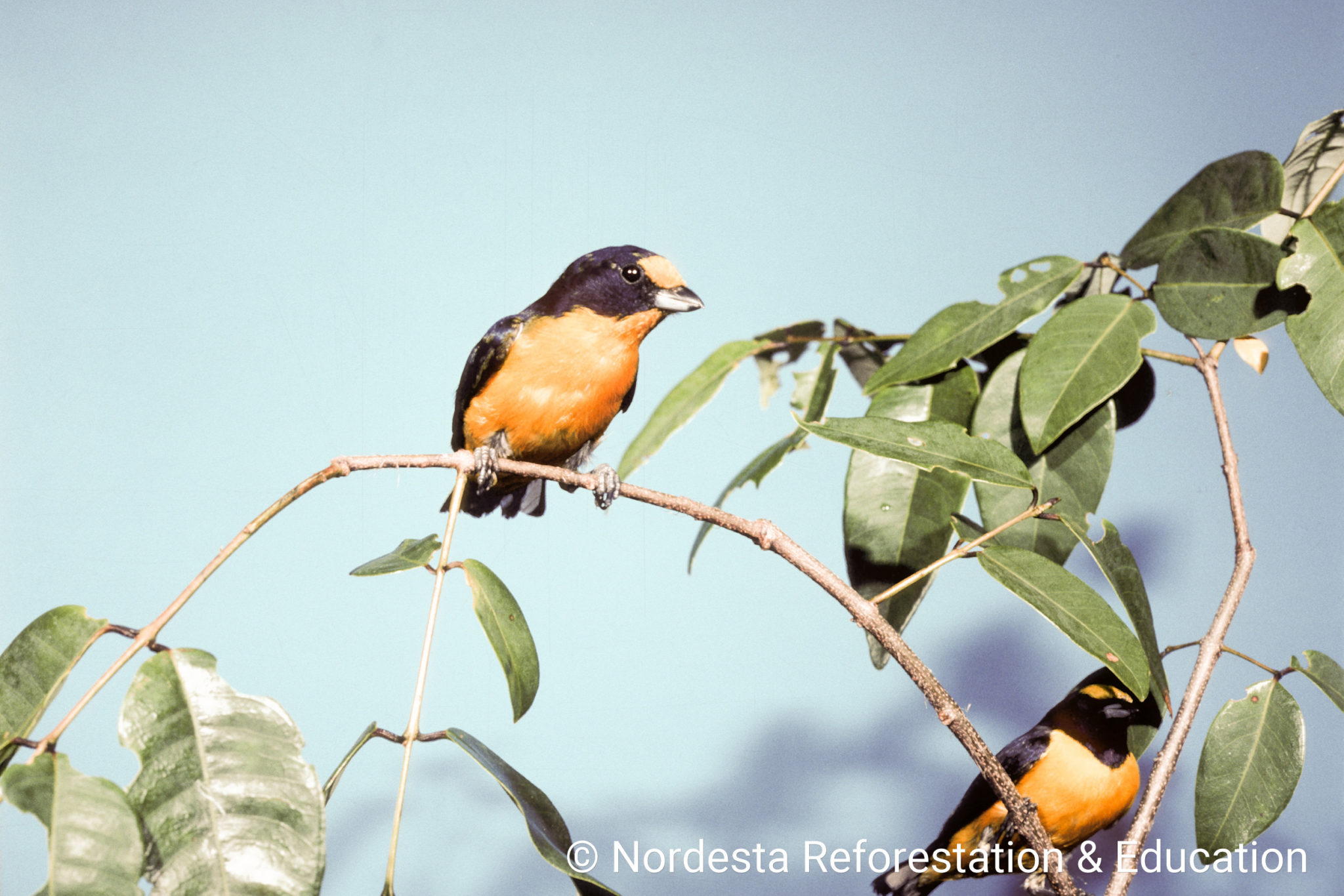
The Violaceous Euphonia, Euphonia violacea, is a small, colourful bird often seen in pairs throughout the year. Known for its fruity diet and vocal skills, it thrives near forested areas in both wild and human-influenced environments.
General behavior
Violaceous Euphonias feed mainly on fruit, including wild and cultivated varieties. They’re agile foragers, sometimes hanging upside down or hovering briefly to reach their food. Outside of breeding season, they may join other tanager species to forage.
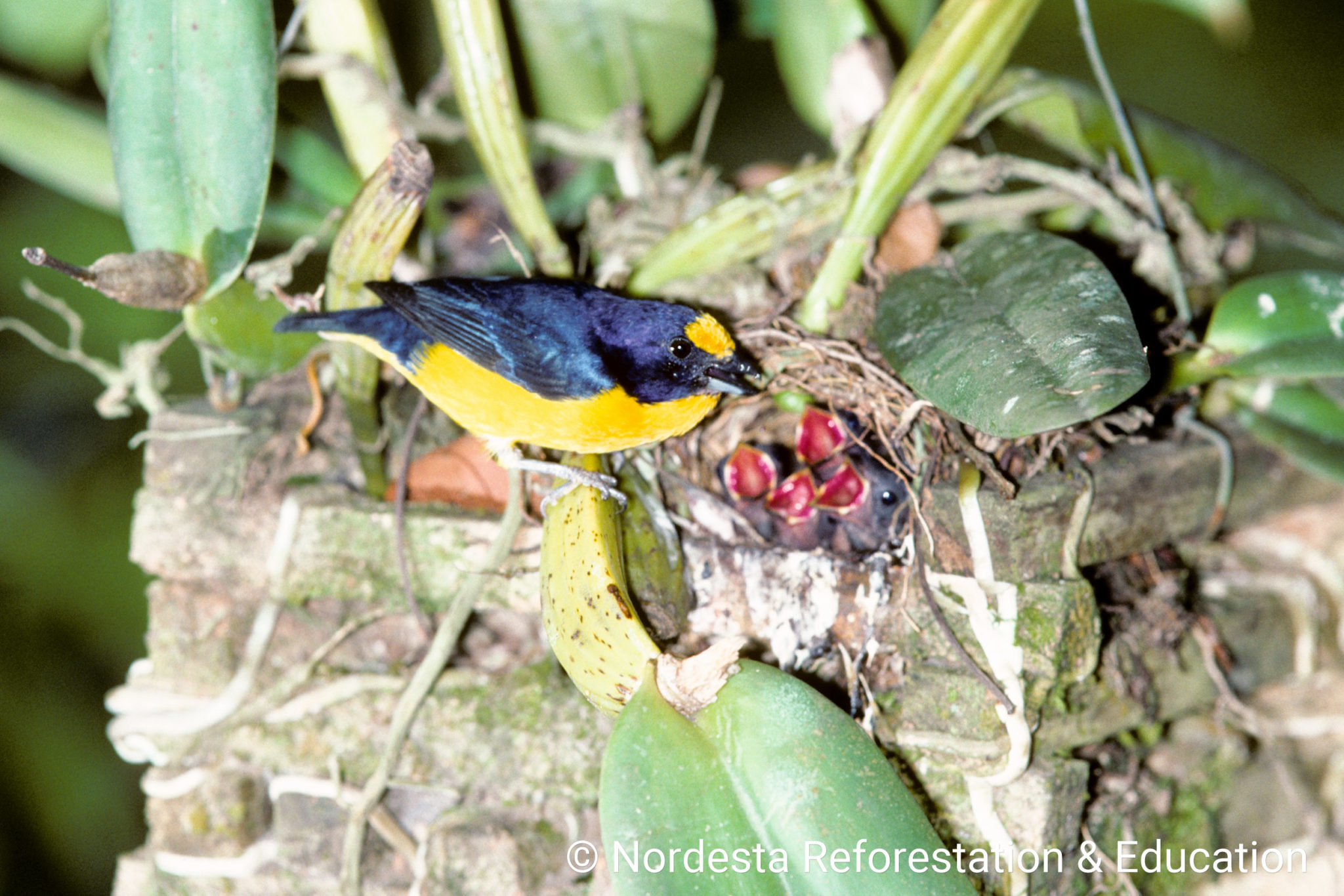
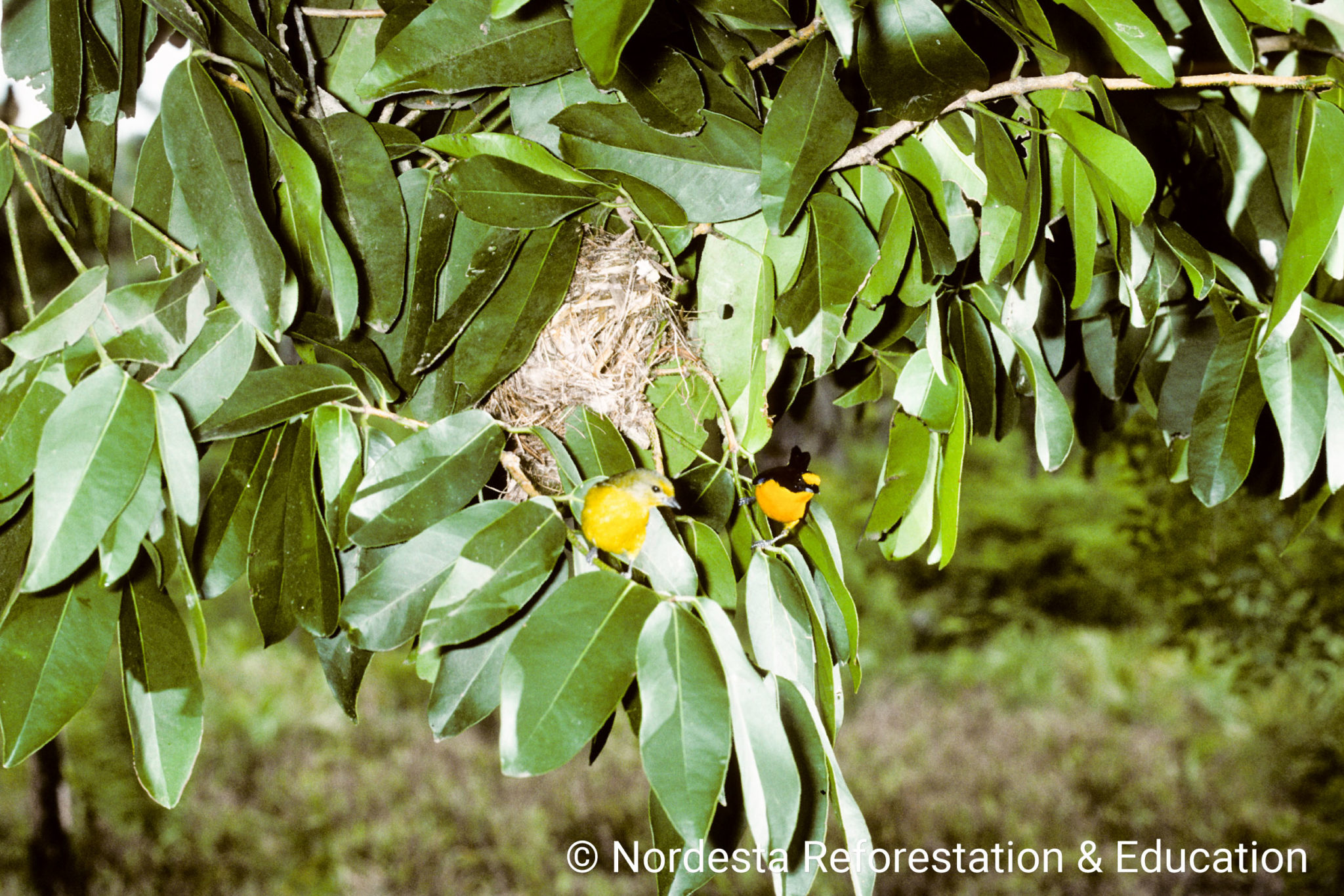
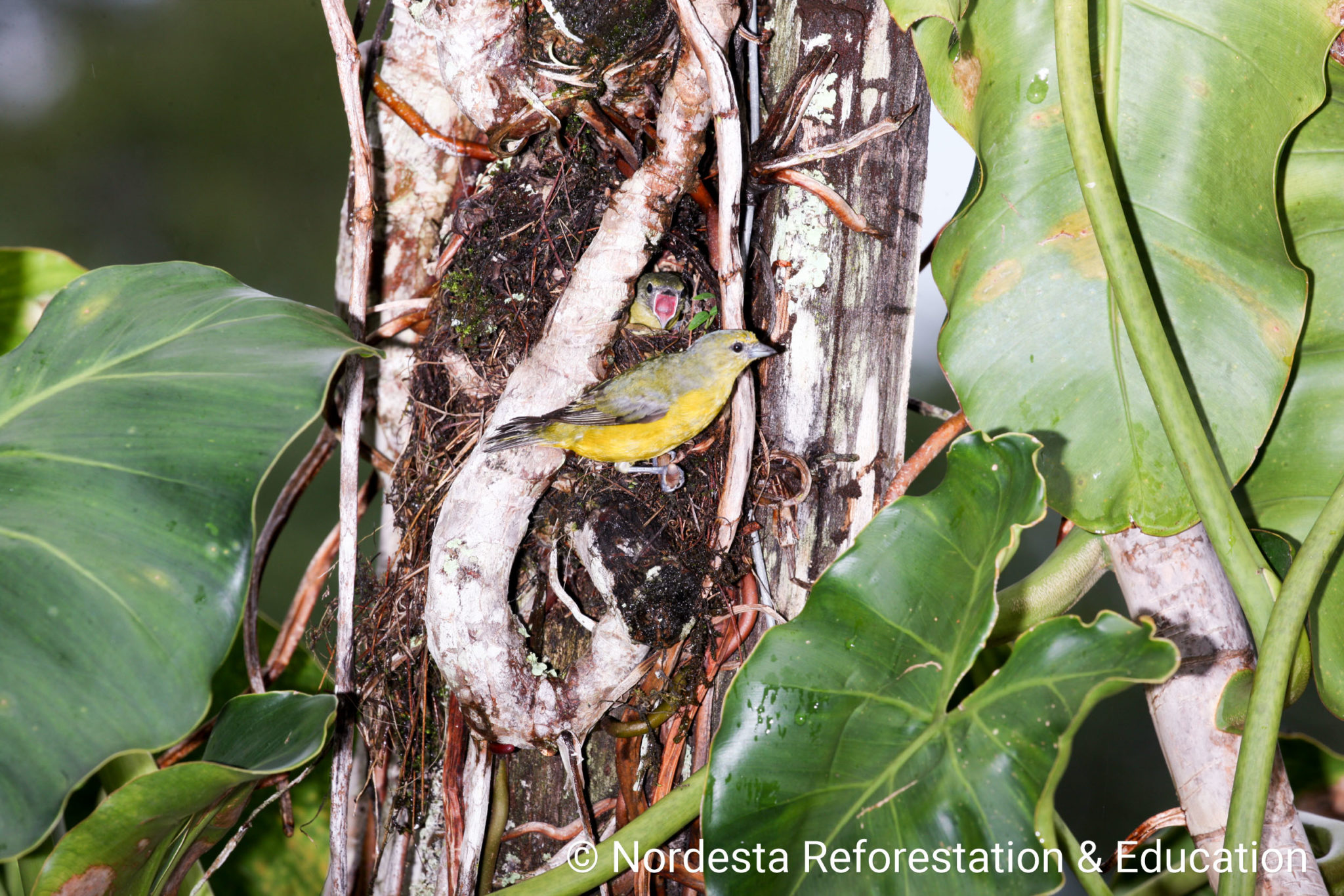
Both male and female take part in building the nest, though only the female is seen incubating the eggs. They show strong site fidelity and may reuse or repair old nests, even in ornamental plants close to human homes. In some cases, different pairs may use the same nest in succession.
They are also known for imitating other birds, including raptors and thrushes, and while both sexes mimic sounds, only the male has a unique song. Their vocalizations may serve as alarms or general communication within flocks.
Habitat
Euphonia violacea prefers forest edges, clearings, orchards, coffee plantations, and gardens near wooded areas.
Nest observation sites
We observed nests in Arcos, Minas Gerais (1 nest), Monte Gordo, Bahia (3 nests) and Quebrangulo, Alagoas (11 nests).
Breeding season
The breeding season spans from March to May, in Quebrangulo, coinciding with the rainy season.
The nest
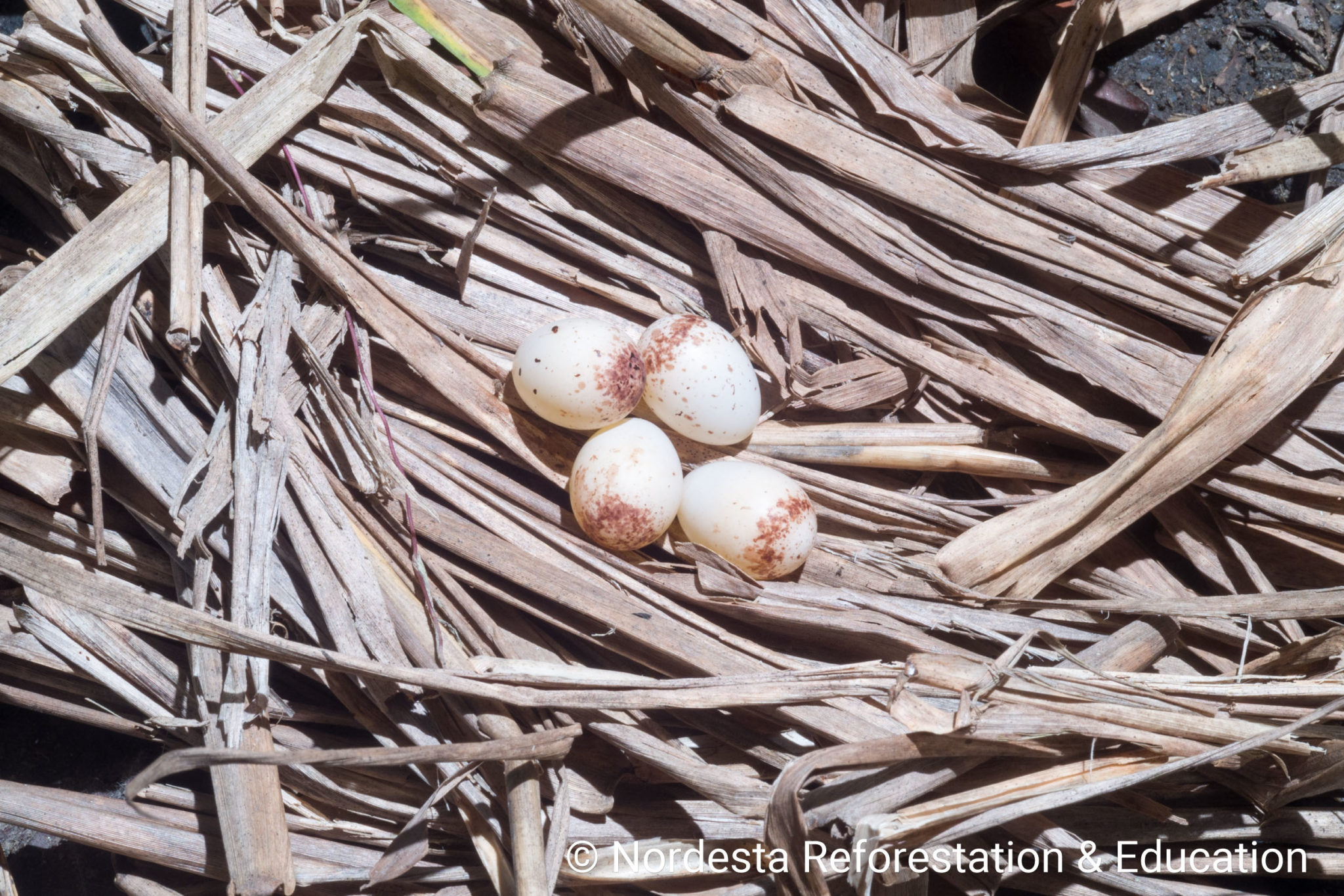
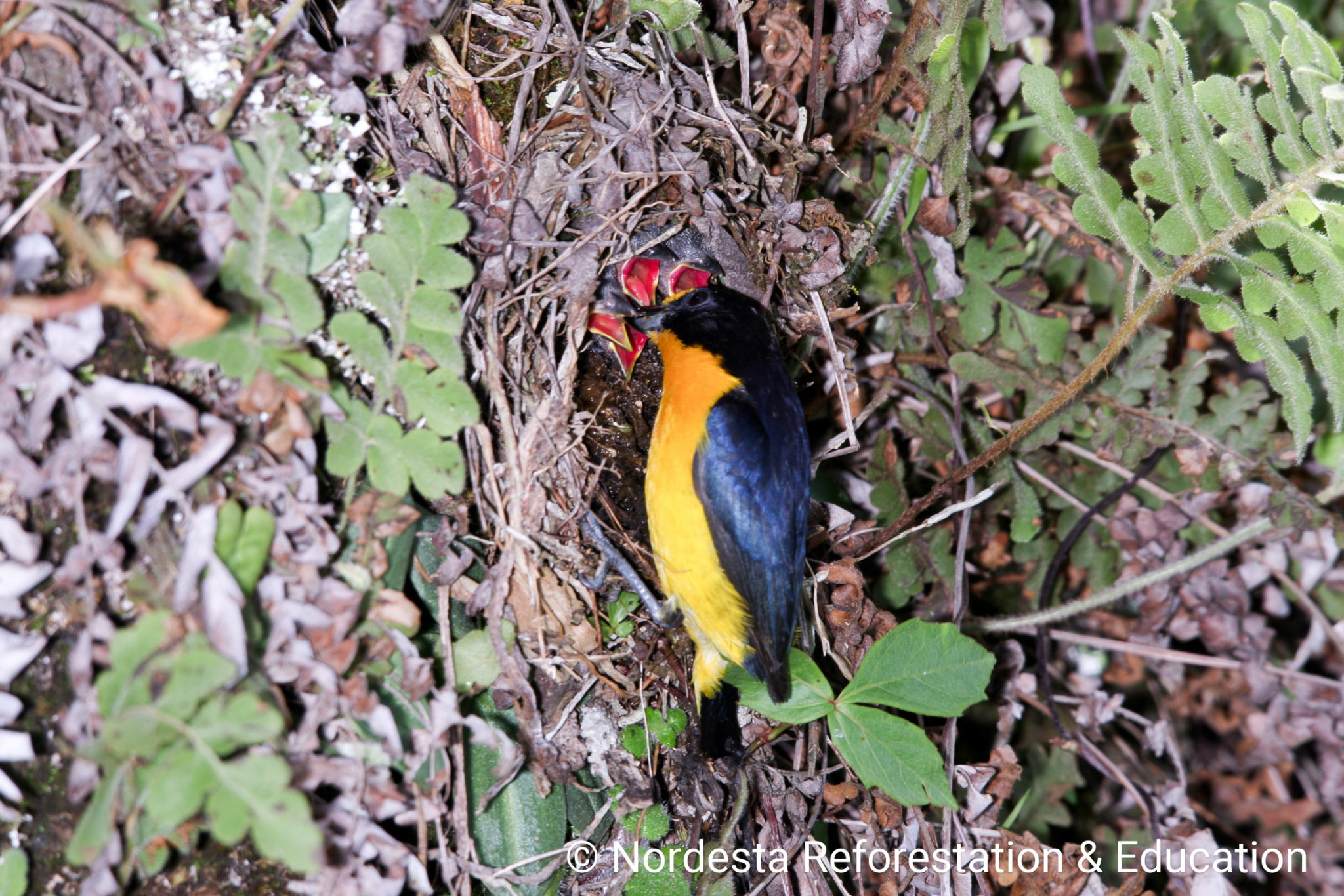
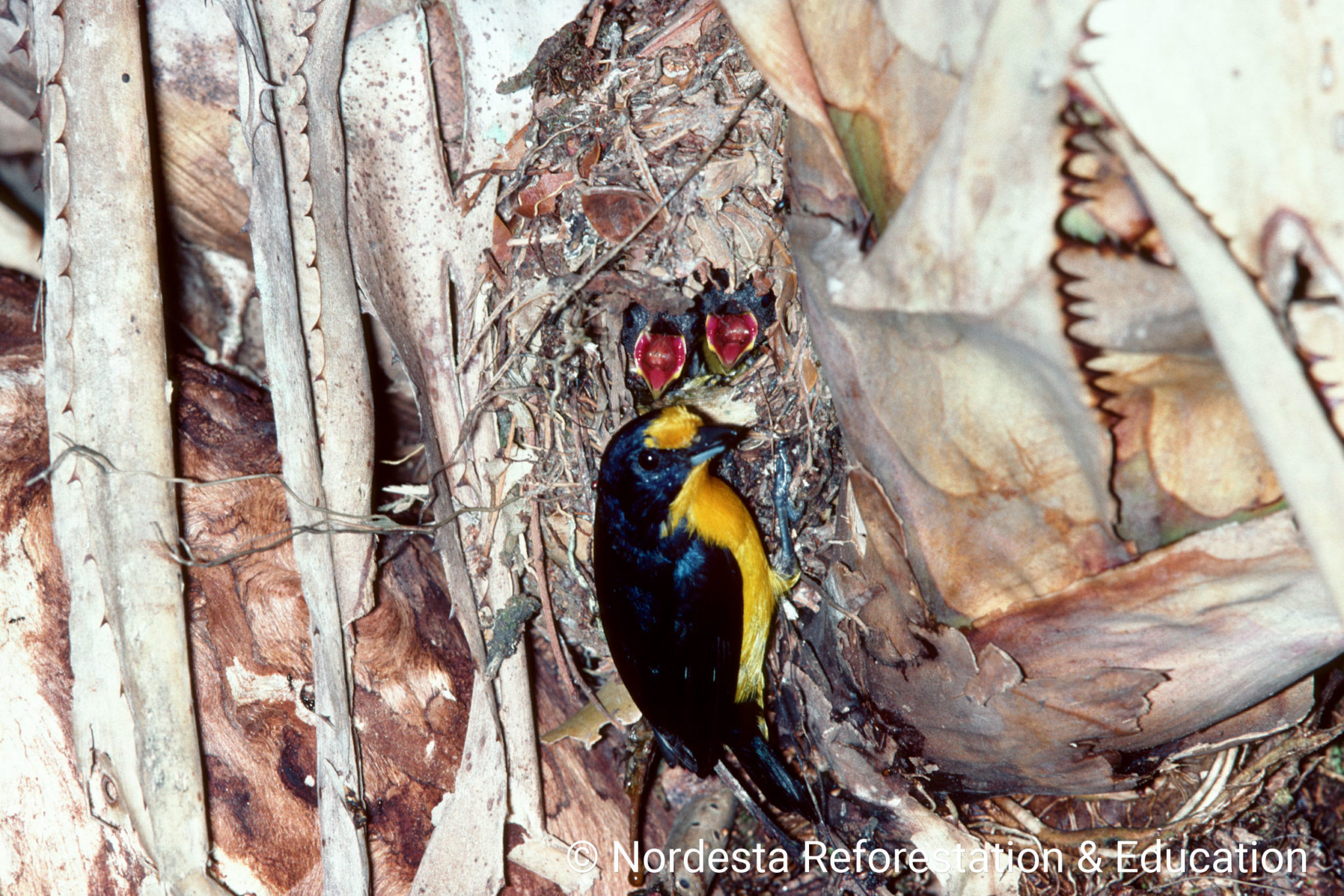
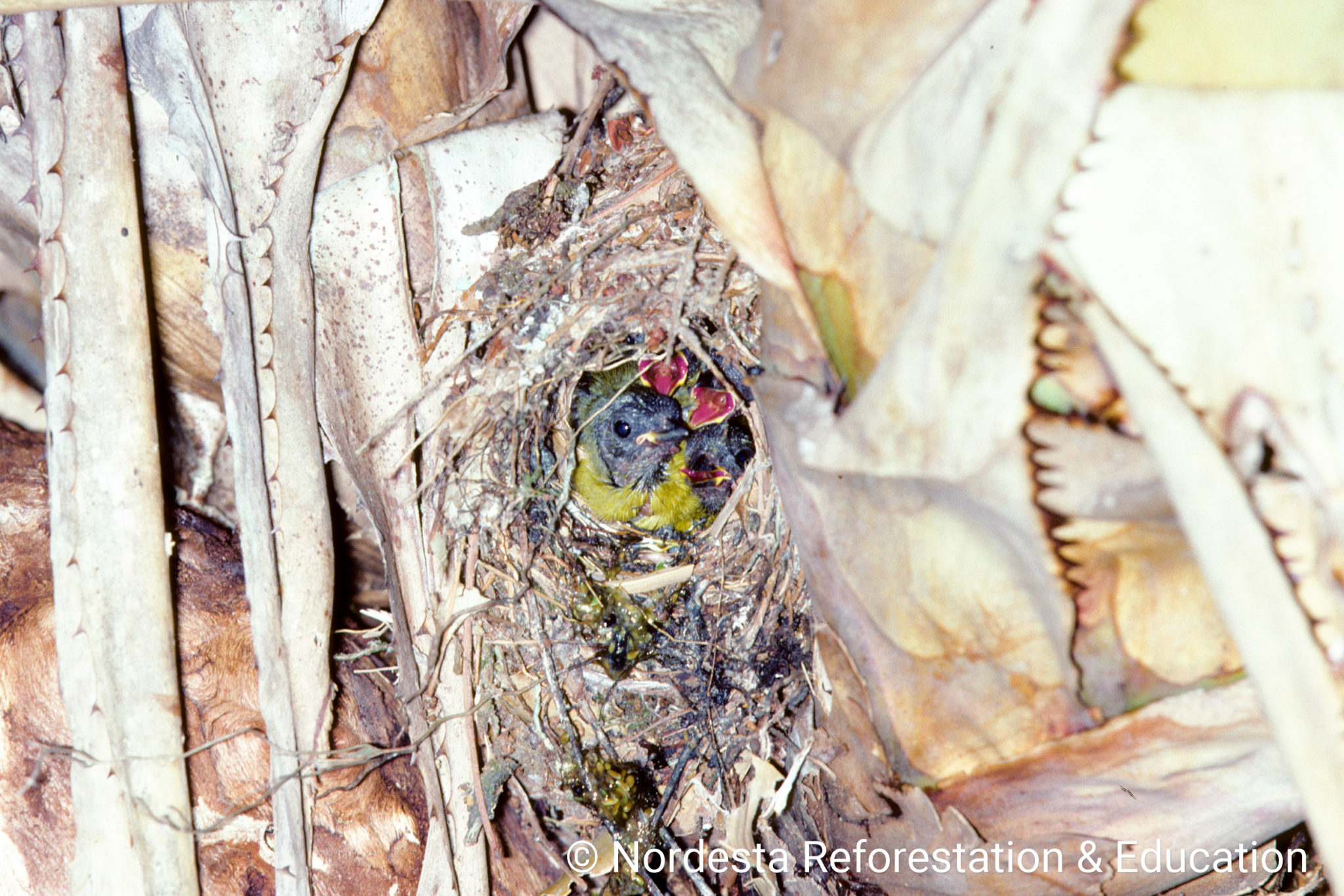
The nest is ball-shaped with a side entrance, made from dry grasses, leaf stems, and fibres. Inside, it’s lined with soft black fungal threads.
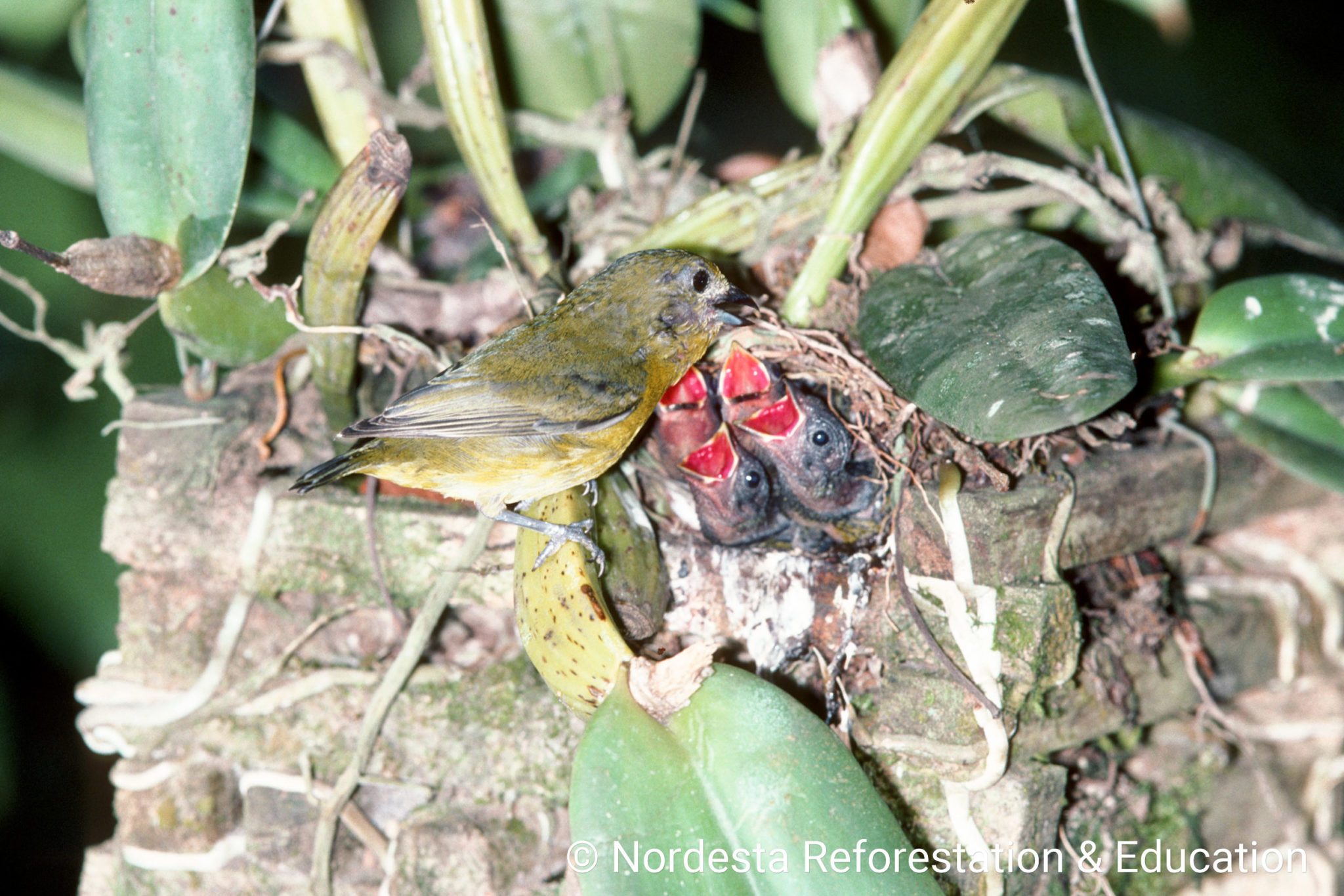
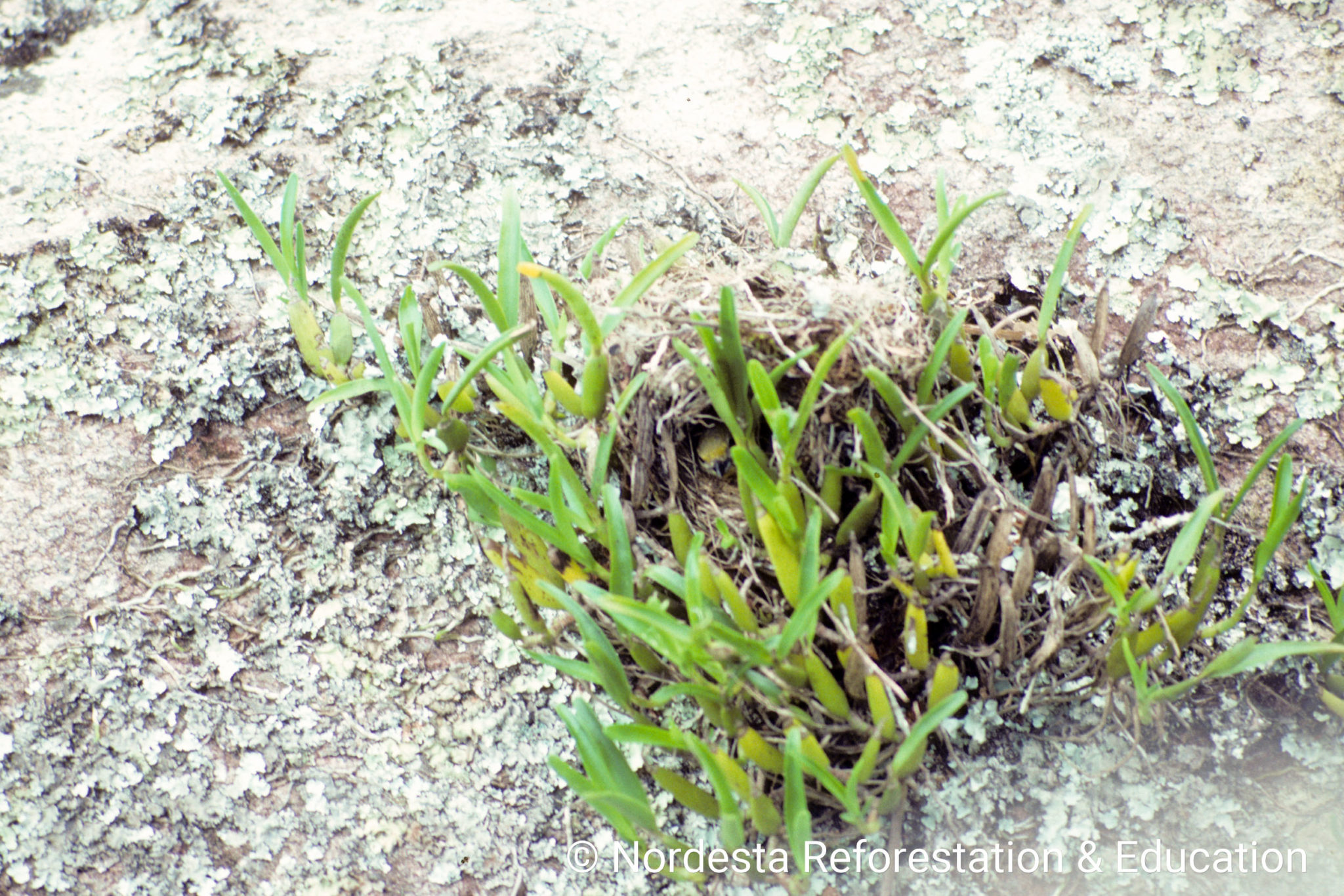
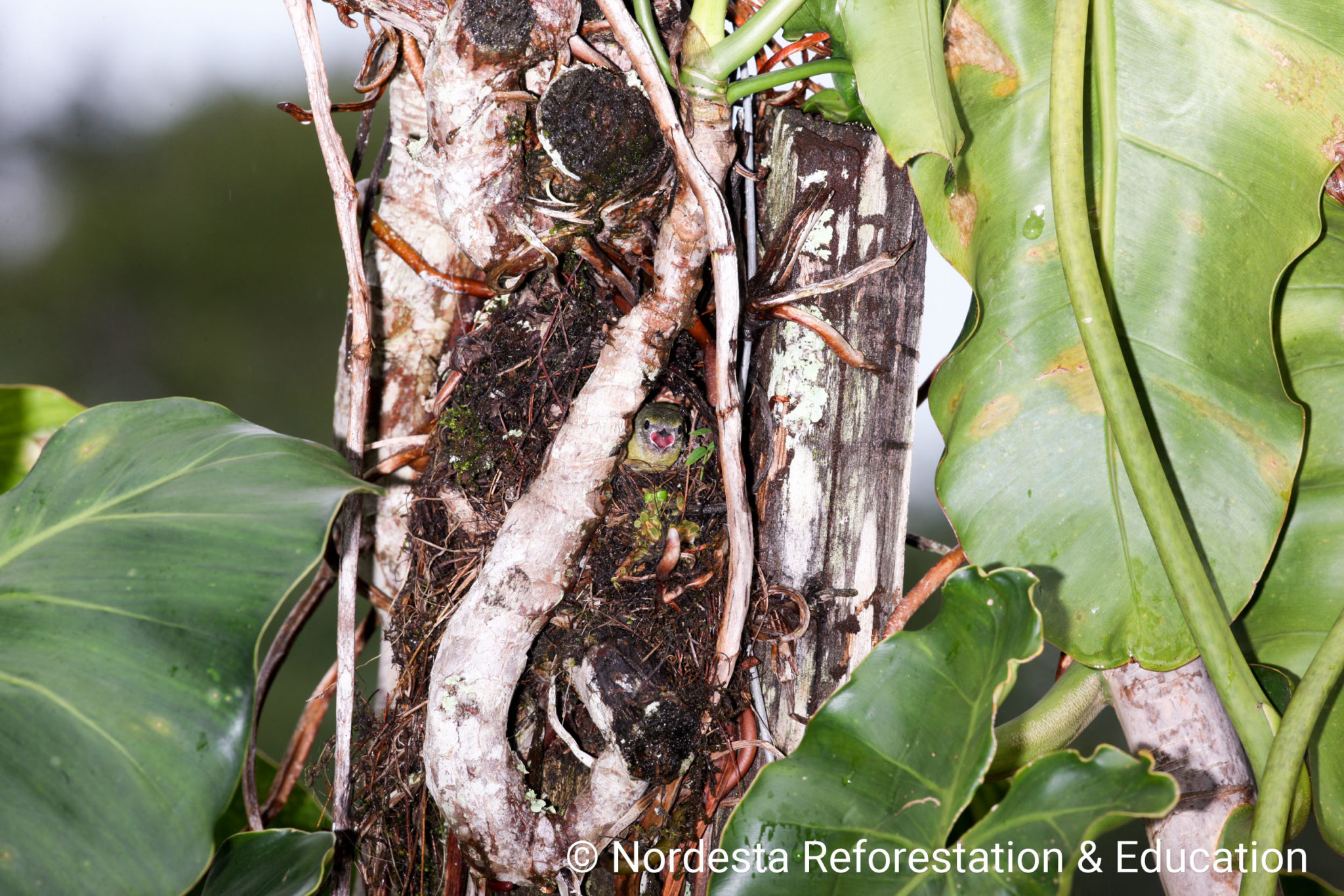
Nests have been found in bromeliads on rocky cliffs, ornamental orchids near homes, and even cacti in open areas, showing remarkable adaptability. In some cases, Euphonia violacea shared nesting space peacefully with other bird species.