Ciconiidae
Wood stork
Mycteria americana
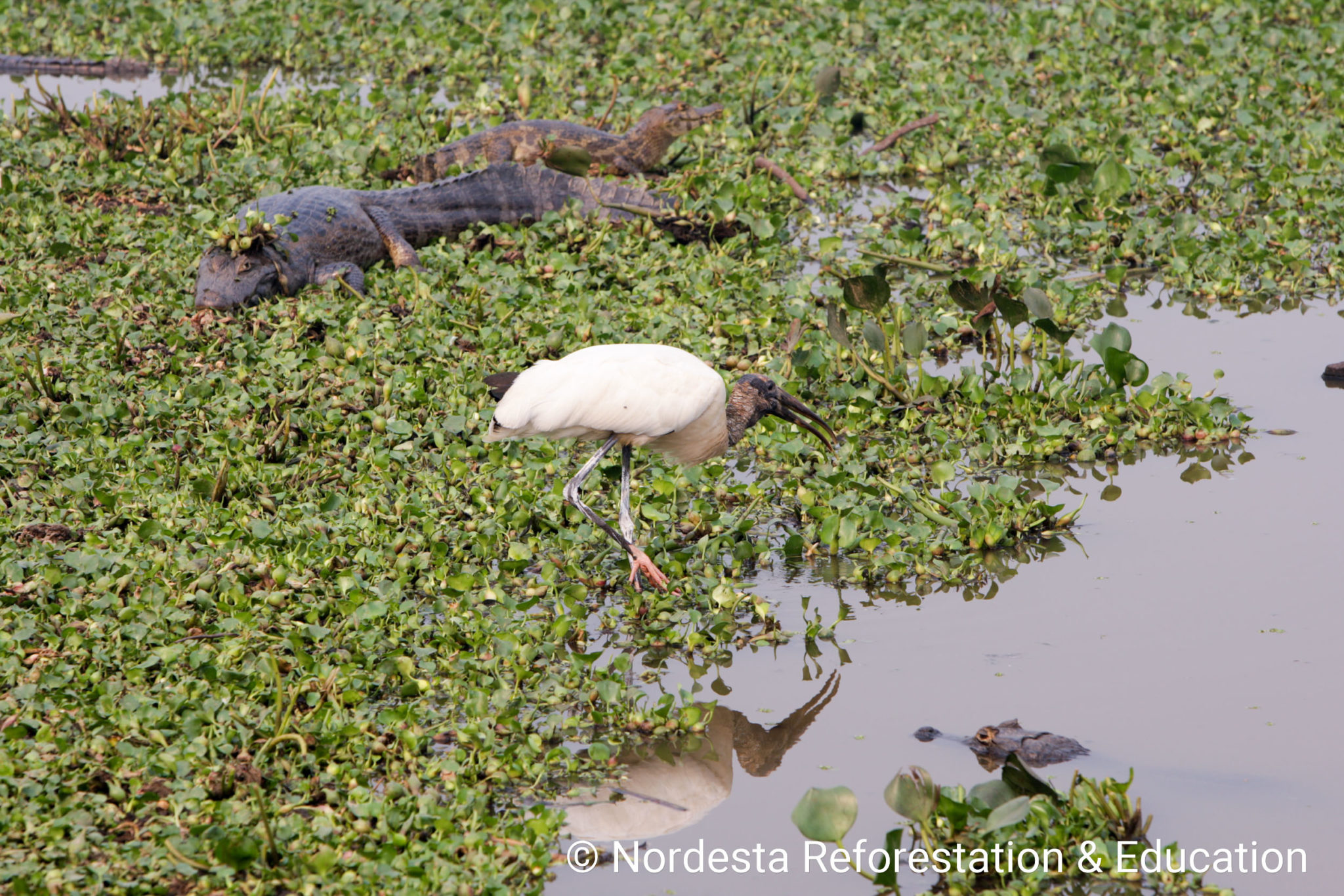
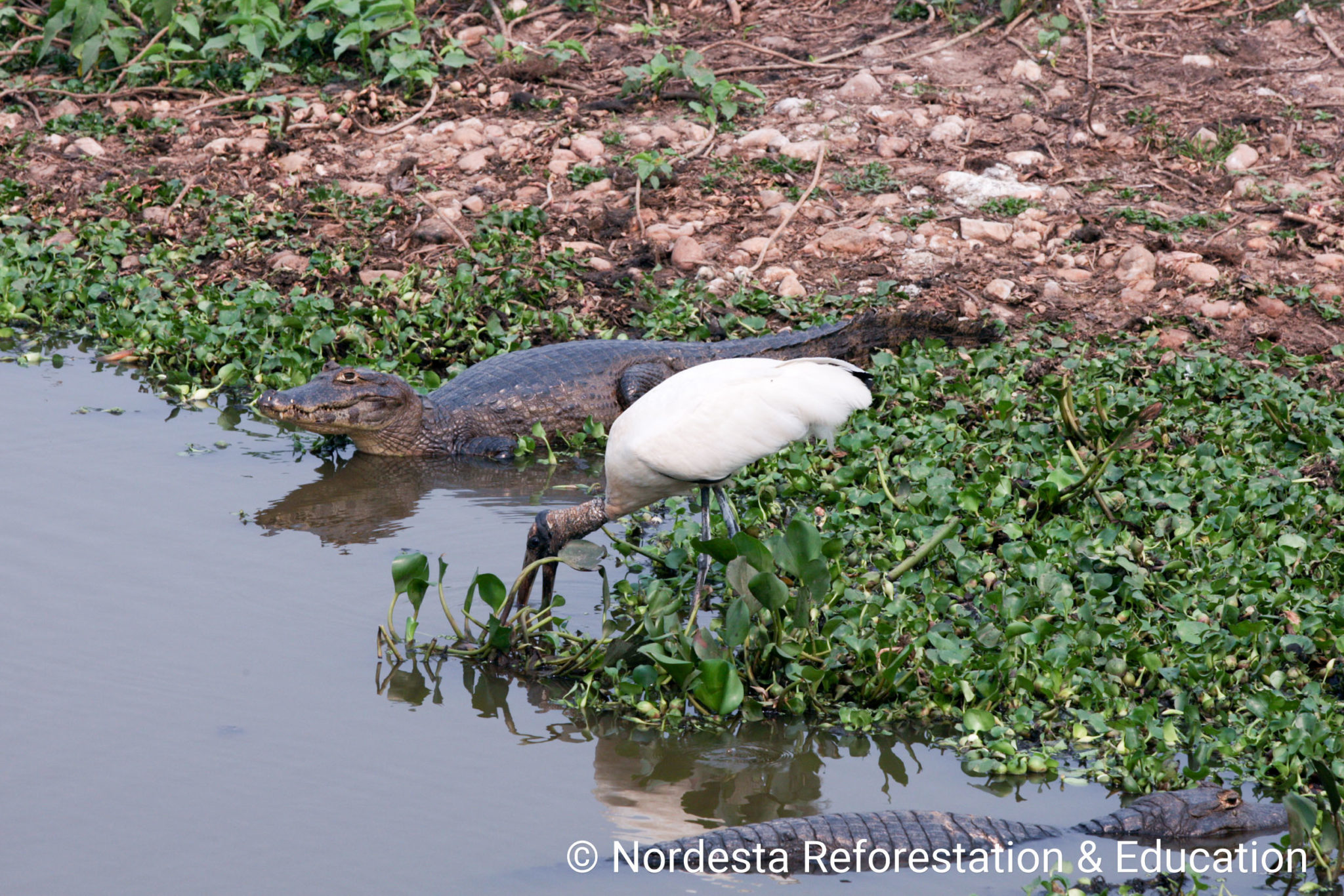
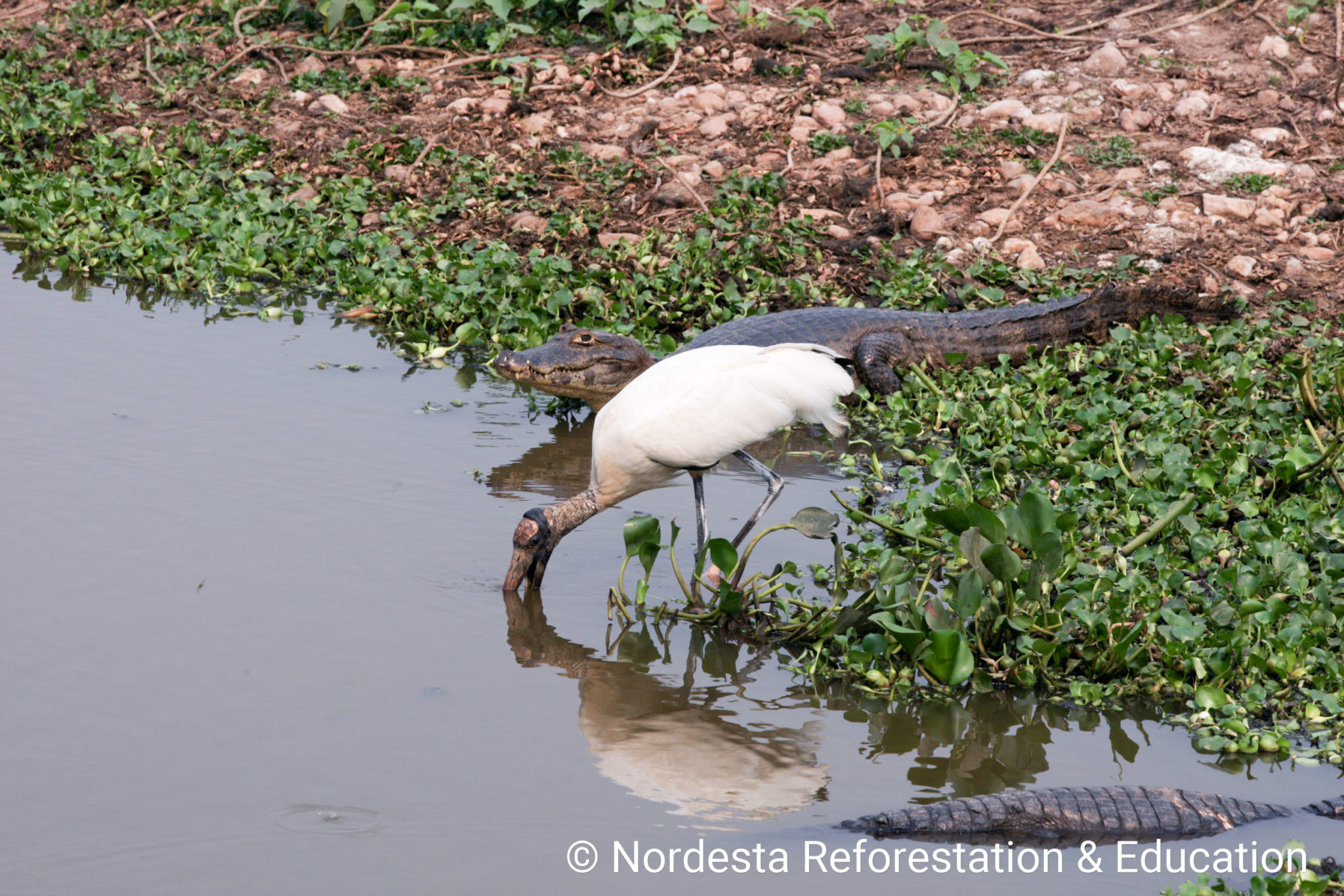
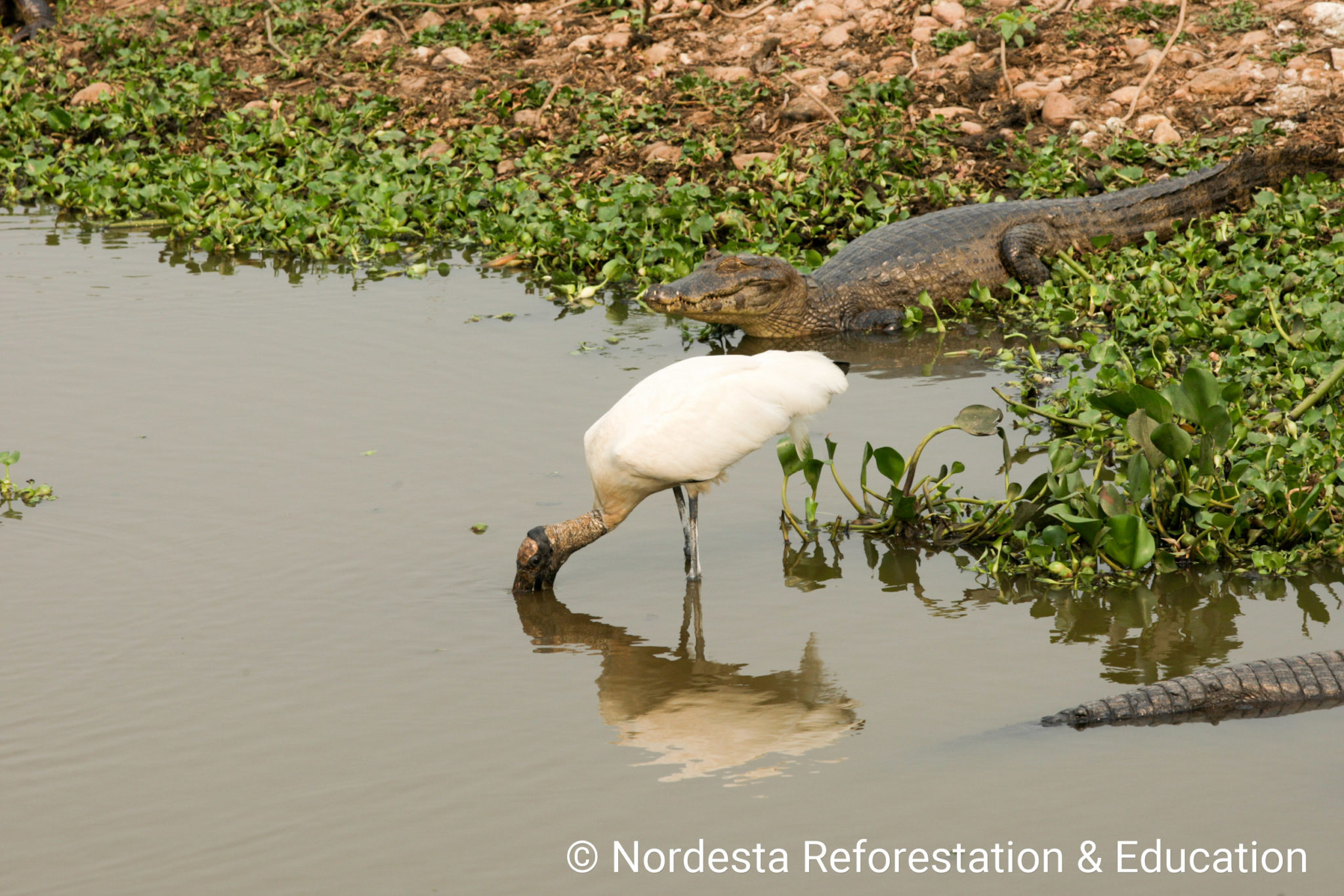
The Wood Stork, Mycteria americana, is a large, unmistakable bird recognized by its white body, black flight feathers, and long, curved beak. It ranges from the southern United States down to northern Argentina and is widespread across Brazil. Unlike many storks, it often ventures into human-altered environments, including rice fields and artificial ponds.
General behavior
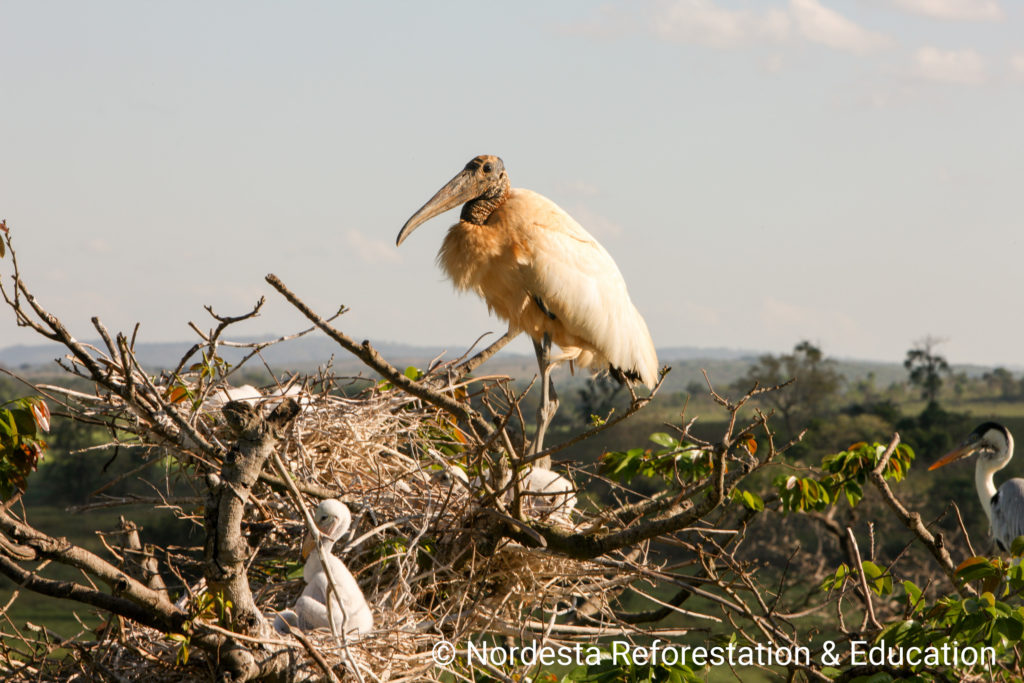
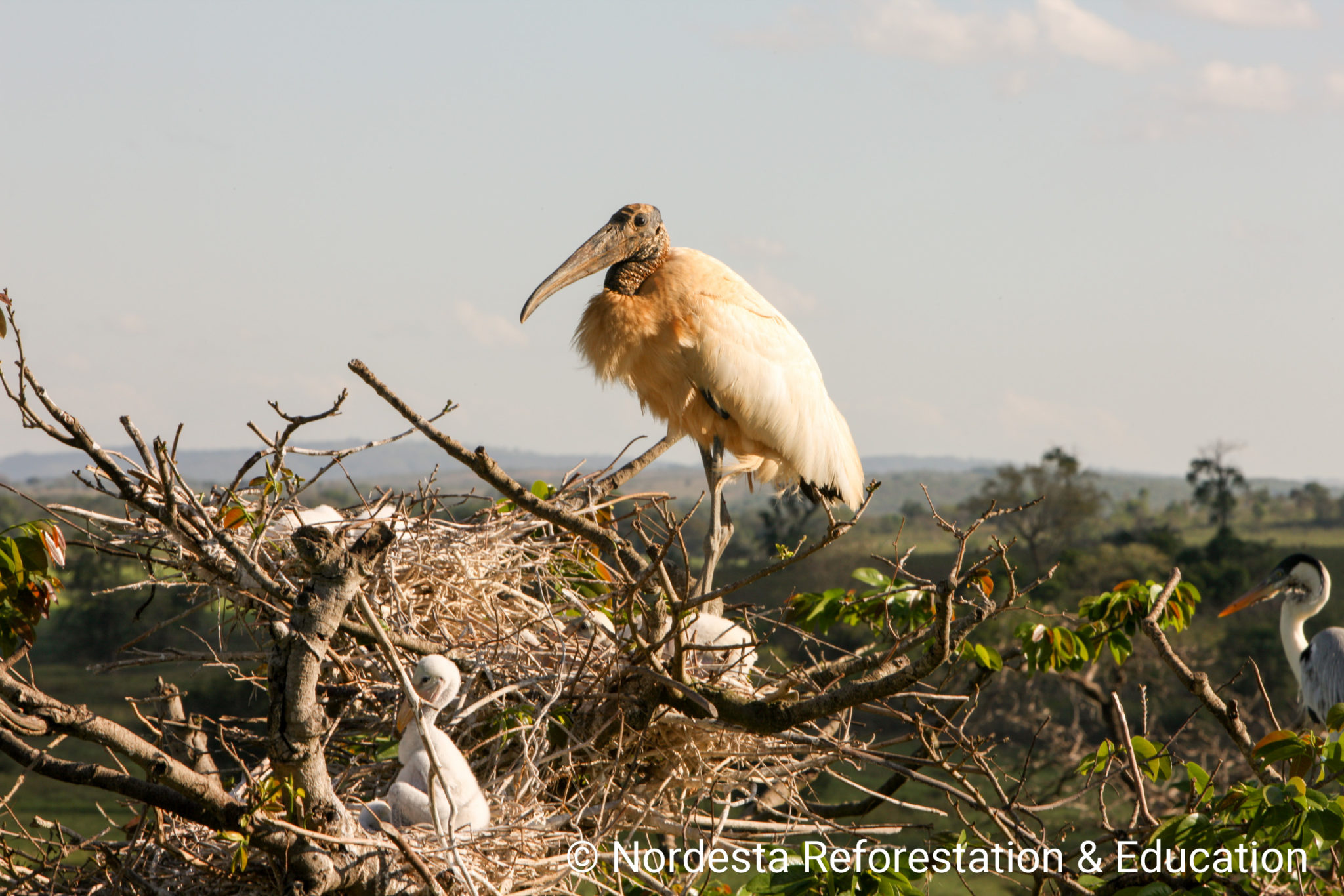
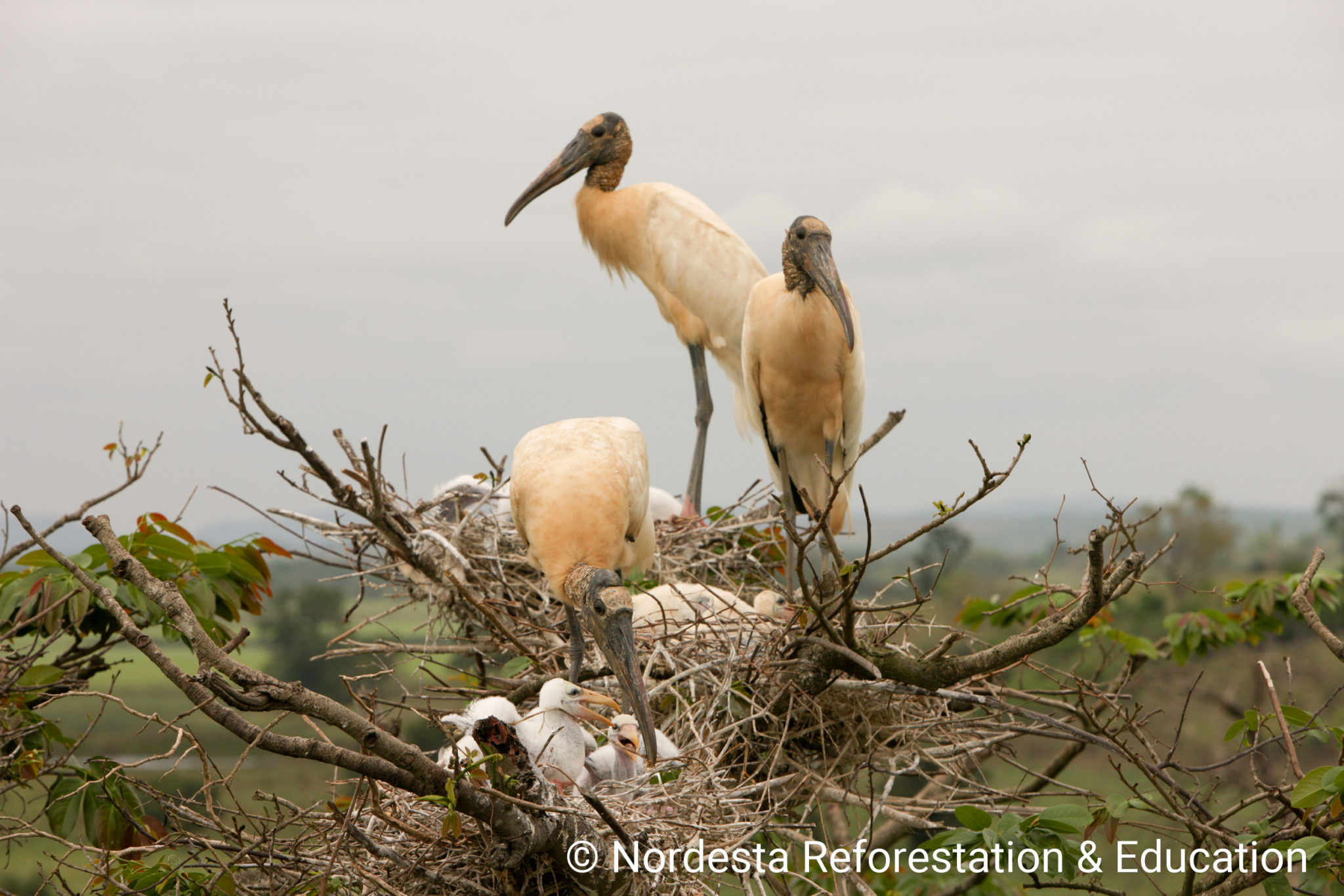
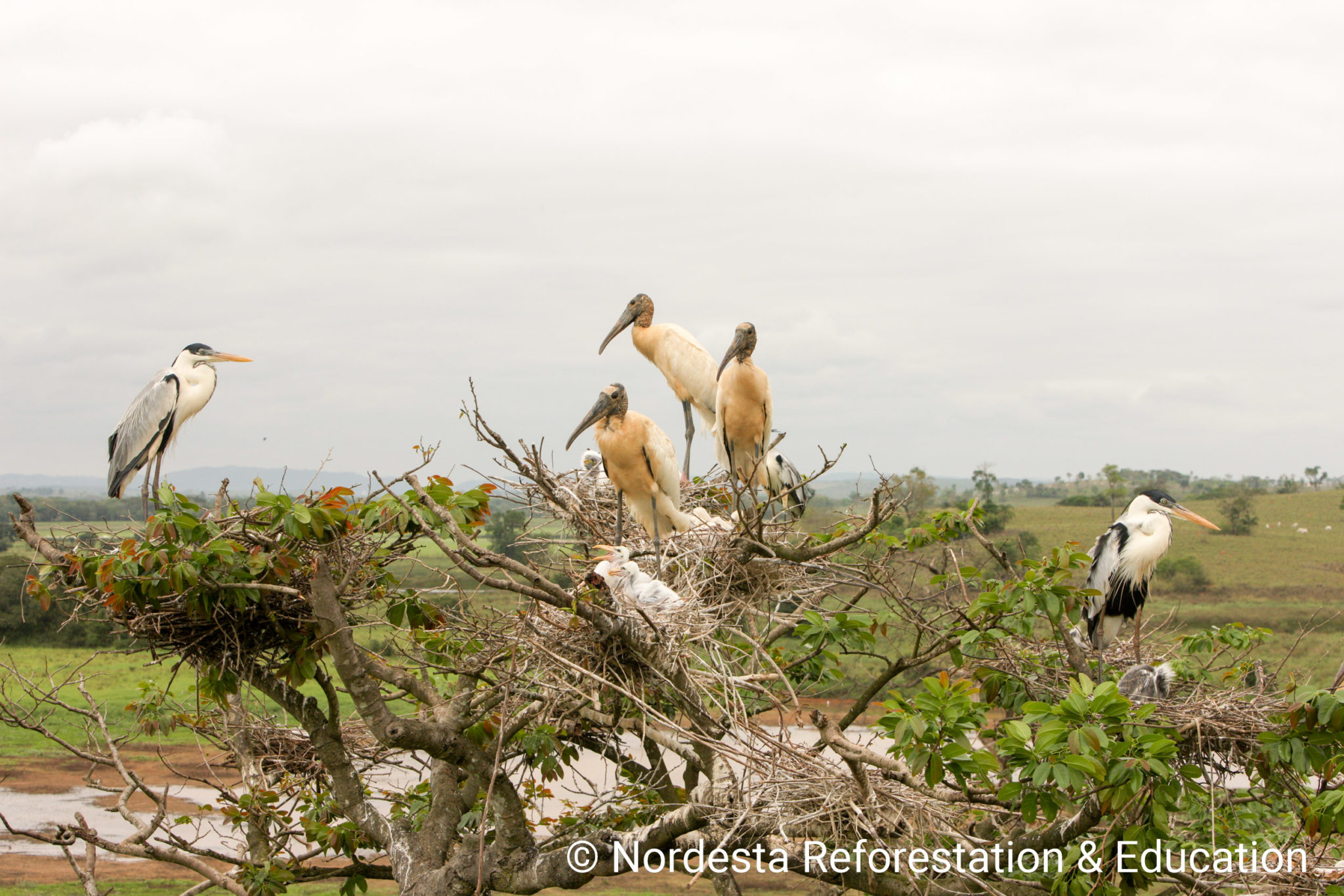
Wood Storks typically nest in colonies, often alongside other large waterbirds like herons and spoonbills. They are attentive parents; both adults take part in feeding their young by regurgitating fish directly into the nest. As the chicks grow, they become more eager, sometimes pecking at the adult’s beak to speed up feeding.
Despite sharing nesting areas with other species, aggressive behaviour is rare. Even in mixed colonies, the birds seem to coexist peacefully, although stronger individuals may secure better nesting spots.
Habitat
This species prefers wetlands, flooded areas, and tree clusters near water bodies. In Brazil’s Pantanal, it often breeds in trees along large ponds. It is adaptable and can also be found nesting in slightly urbanized or altered landscapes.
Nest observation sites
We observed nests in Arcos, Minas Gerais (18 nests), and Poconé, Mato Grosso (64 nests).
Breeding season
In Brazil, Wood Storks breed mainly from June to September, particularly in the Pantanal. In Minas Gerais, nests were active by late September.
The nest
Mycteria americana builds large stick nests high in trees, often in colonies. They may nest alongside species like spoonbills and herons, sometimes just centimetres apart. Nests are reused and maintained throughout the season, with adults often bringing new branches.
Feeding is a dramatic process, with adults regurgitating entire fish into the nest, sometimes too large for chicks to manage. In some cases, adults may eat the fish themselves if the young are unable to eat it.
For more information, refer to the publication: Studer, A., & Crozariol, M. A. 202_, pages ________, or contact the author at anita.birdaves@gmail.com
Reference:
Studer, A., & Crozariol, M. A. (202_). New breeding information on Brazilian birds. 4: